

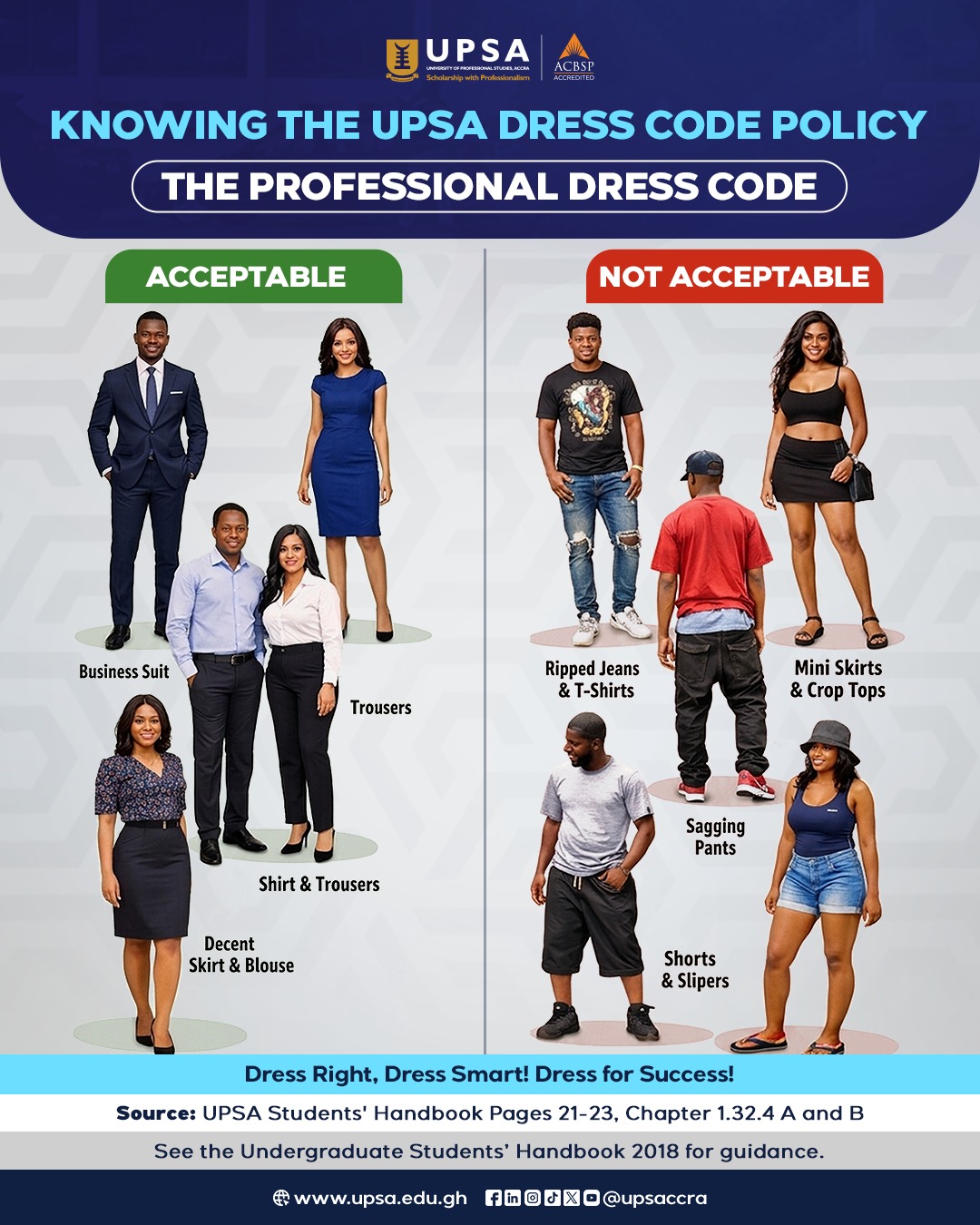
The University of Professional Studies, Accra (UPSA) has begun enforcing a strict dress code as students resume classes, cautioning that non-compliance could attract disciplinary measures, including suspension. The directive, outlined in the Students’ Handbook, is designed to instil professionalism and prepare learners for the demands of the workplace.
The policy specifies detailed standards for clothing, grooming, and general appearance. Students are required to present themselves in a manner described as “clean, neat, and professional.” Revealing, tight, or torn attire is prohibited, with items such as ripped jeans, mini skirts, sleeveless tops, and clothing bearing offensive slogans barred from campus.
For male students, the guidelines mandate neat haircuts above the collar, a clean-shaven look, and prohibit earrings or facial piercings. Dark suits paired with white shirts and conservative ties are recommended, while polished leather shoes are required—sneakers and boots are disallowed. Female students must also maintain a professional appearance, with dresses and skirts extending at least to the knee. Sleeveless, strapless, or backless outfits are banned, as are excessive jewellery and multiple piercings. Cosmetics must be applied moderately.
The rules extend to footwear, forbidding slippers, flip-flops, and flashy trainers. Tattoos must remain concealed, and clothing must not expose undergarments or the waistline.
While the university allows a more relaxed dress style on Fridays, students are still required to wear neat, ironed clothing without holes or tears. Even on dress-down days, T-shirts are restricted to official university-branded apparel, and leather shoes remain compulsory. Mondays have been designated as mandatory professional dress days, with all students expected to wear suits or jackets.
University authorities say the rules will be strictly enforced. Lecturers can ask improperly dressed students to leave lectures, while repeat offenders risk referral to heads of department and counselling. Students reported more than twice could face suspension for a semester. In addition, the university says it may publish the names of students who repeatedly breach the dress code at the end of each semester.
Officials say the policy is not just about appearance but about discipline and identity. Students are also required to attend orientation sessions on the dress code as part of their academic life. The university maintains that the standards are designed to reflect ambition, integrity and excellence, both on campus and beyond.
Source: Edward Acquah

