

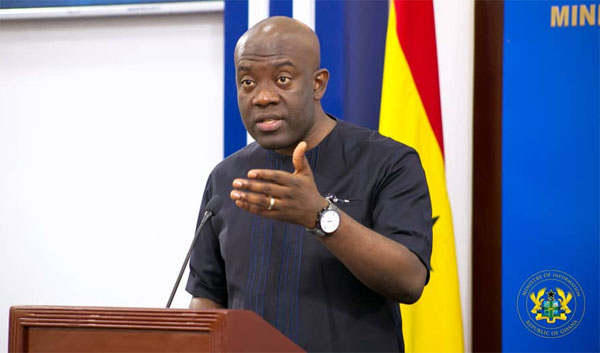
Kojo Oppong Nkrumah, Member of Parliament for Ofoase-Ayirebi, has returned to the Supreme Court to challenge a decision by Justice Gabriel Scott Pwamang, who dismissed his earlier request for an interlocutory injunction regarding the holding of criminal trials during the current legal vacation. Justice Pwamang, acting as a single Justice of the Supreme Court, rejected the injunction application on August 21, 2026.
Oppong Nkrumah is now appealing to a three-member Supreme Court panel to overturn that decision and grant the injunction. This application is part of the MP’s broader constitutional case challenging administrative directives from the Chief Justice, which authorise certain High Court judges to conduct criminal trials during the legal vacation—from August 1 to September 30, 2026. In his application, Oppong Nkrumah contends that Justice Pwamang erred in dismissing the injunction.
He also questions whether the Attorney-General can properly represent the Chief Justice when the Chief Justice’s administrative actions are being challenged under Articles 23 and 296 of the 1992 Constitution. The applicant maintains that Justice Pwamang erred in dismissing his preliminary objection on the issue.
Oppong Nkrumah also argues that the Chief Justice’s failure to respond to his affidavit and deny his statement of case should have been taken into account in determining the application for an injunction. The MP further contends that Justice Pwamang went beyond the permissible scope of an interlocutory application.
According to him, although the single Justice recognised that the substantive constitutional questions were not for determination at the interlocutory stage, the ruling nevertheless made definitive pronouncements which, in the applicant’s view, substantially predetermined issues reserved for determination by the full bench.
He is therefore asking the three-member panel to reconsider the legal approach adopted in dismissing the injunction. Kojo Oppong Nkrumah also argues that the Court failed to sufficiently consider the public interest implications of allowing the impugned arrangements to continue.
He contends that significant constitutional issues remain to be resolved in the main action and that proceeding with the related criminal trials could compromise the integrity of the case. The applicant also asserts that interim relief is necessary due to the urgent nature of the warrants, especially as the legal vacation has already commenced.
He argues that it is more prudent to temporarily halt the execution of the warrants than to allow the trials to continue while the substantive case is still pending. Consequently, the NPP legislator is requesting the three-member panel to grant an interlocutory injunction preventing the Chief Justice and designated judges from implementing, enforcing, or acting on the warrants that authorise selected High Court judges to conduct criminal trials during the legal vacation.

