

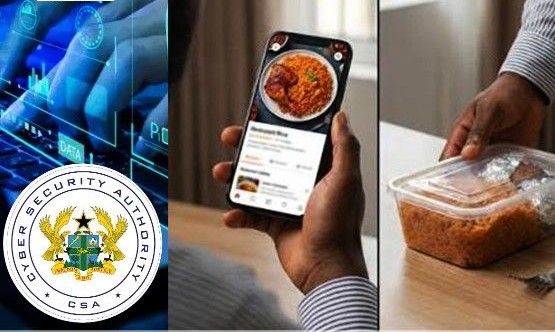
Cases of restaurant and food vendor impersonation scams in Ghana nearly doubled in the first half of the year, with victims losing close to GHS300,000, according to the Cyber Security Authority (CSA). Between January and June, the Authority recorded 112 reports involving both vendors and customers—up from 61 cases during the same period last year. Losses also spiked from GHS84,592.00 to GHS296,083.68.
The CSA explained that fraudsters are increasingly manipulating online business listings to deceive customers into paying for food that is never delivered or to steal mobile money credentials. Legitimate restaurants and vendors are targeted through altered contact details on Google Search, Google Maps, and other platforms. In some instances, scammers exploit Google’s “suggest an edit” feature, claim unverified business profiles, or create fake duplicate listings that replace genuine phone numbers with fraudulent ones.
To boost visibility, the fraudsters also purchase sponsored search ads, ensuring the fake contact details appear prominently in search results—making it more likely that unsuspecting customers reach them instead of the real businesses. Once contacted, the fraudsters accept food orders and instruct customers to transfer payment to a mobile money account. After receiving the money, they stop responding and no food is delivered.
In other cases, victims are directed to fake payment websites under the pretext of confirming or processing an order. These websites request personal information, including names, delivery addresses and mobile money numbers. The stolen information is then used to carry out unauthorised transactions, leading to further financial losses.
The Cyber Security Authority has urged the public to verify restaurant contact details through official websites, verified social media accounts or trusted food delivery platforms before placing orders.
It also advised customers to avoid making payments through unfamiliar links, insist on paying after delivery where possible, never disclose their mobile money PINs, one-time passwords or banking credentials, and reject payment prompts they did not initiate.
Customers are further encouraged to confirm payment instructions directly with businesses using independently verified contact details and to regularly monitor their mobile money accounts for suspicious activity.
The CSA also urged restaurants, food vendors and other online businesses to claim and verify their Google Business Profiles, prominently display their official contact details and payment channels, regularly monitor their online listings for unauthorised changes, and report fraudulent or duplicate business profiles to Google immediately.
The authority said members of the public can report cybercrime incidents or seek assistance through its 24-hour Cybersecurity and Cybercrime Incident Reporting Centre by calling or texting 292, sending a WhatsApp message to 0501603111, or emailing report@csa.gov.gh.
Source: Edward Acquah

