

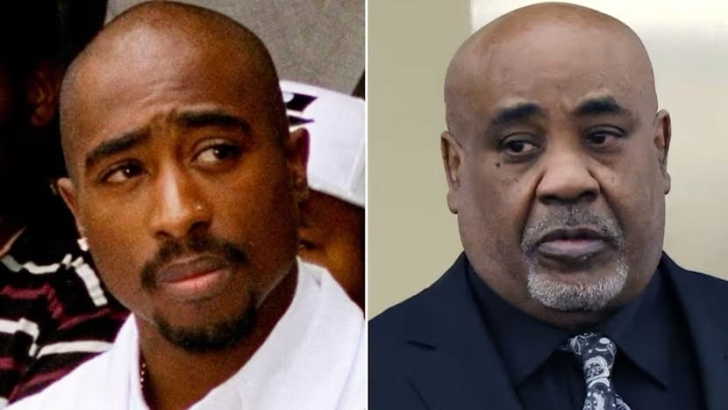
Former gang leader Duane “Keffe D” Davis has been found guilty of orchestrating the murder of rap icon Tupac Shakur, bringing a conviction in a high-profile cold case that has captivated the hip-hop world for nearly three decades. A Las Vegas jury convicted the 63-year-old Davis on one count of murder with a deadly weapon in connection with Shakur’s death in a drive-by shooting on September 7, 1996.
Davis, dressed in a black suit, remained expressionless as the verdict was delivered in court on Monday before stating that he intended to appeal the decision. During the trial, jurors heard a recording of a 2008 police interview in which Davis acknowledged being inside the vehicle from which the shots were fired. However, he maintained that he was not the person who pulled the trigger.
Prosecutors argued that Davis, a former leader of the South Side Compton Crips, orchestrated the attack and provided the firearm used by his nephew, Orlando Anderson, to shoot Shakur. Anderson, who consistently denied involvement in the killing, was himself killed in an unrelated shooting in 2008.
Shakur’s relatives held hands, hugged and wept as the guilty verdict was announced. The rapper was just 25 when he was killed at the peak of his career, having established himself as one of hip-hop’s most influential and enduring voices. He has sold more than 75 million records worldwide.
For nearly 30 years, Shakur’s killing remained one of the most prominent unsolved cases in the United States, generating numerous theories and conspiracy claims but no conviction—until now. During the trial, prosecutors said Davis had planned the shooting as retaliation after Anderson was involved in a fight with Shakur and his crew in Las Vegas just hours earlier.
Shakur’s murder happened at a time of intense rivalry between the East Coast and West Coast rap scene and amid gang feuds between the Bloods and Crips, which had deep roots within hip-hop at the time. His family appeared emotional in court, his sister embracing a prosecutor after the verdict was read while others sat crying nearby. Outside, devoted fans of Shakur were similarly crying and cheering.
The key evidence in the case came from Davis’ own statements in which he repeatedly and publicly acknowledged being inside the white Cadillac from which the fatal shots were fired. He confessed to authorities about his involvement in Shakur’s death during a secret police interview in 2008, which was related to the murder of fellow rapper Notorious B.I.G., whose real name was Christopher Wallace.
In his 2019 memoir, Compton Street Legend, Davis provided further details about his role. However, the book and his media interviews negated a protective agreement he had established with authorities that prevented any criminal charges from being filed against him. As a result, the court ruled that his police interview could be used in the murder trial.
Davis told police in 2008 that his nephew fired the fatal shots. During closing arguments, prosecutor Binu Palal urged jurors to take Davis at his word and find him guilty. For years, Palal argued, Davis has been claiming responsibility for Tupac Shakur’s murder through documentaries, his memoir, podcasts, and police interviews. “He’s the shot caller. In every instance and in every iteration, he is the leader of the South Side Crips,” Palal told the jury. “When you have the shot caller sitting in the front seat when the shots are fired, there’s no doubt that he is responsible.”

