
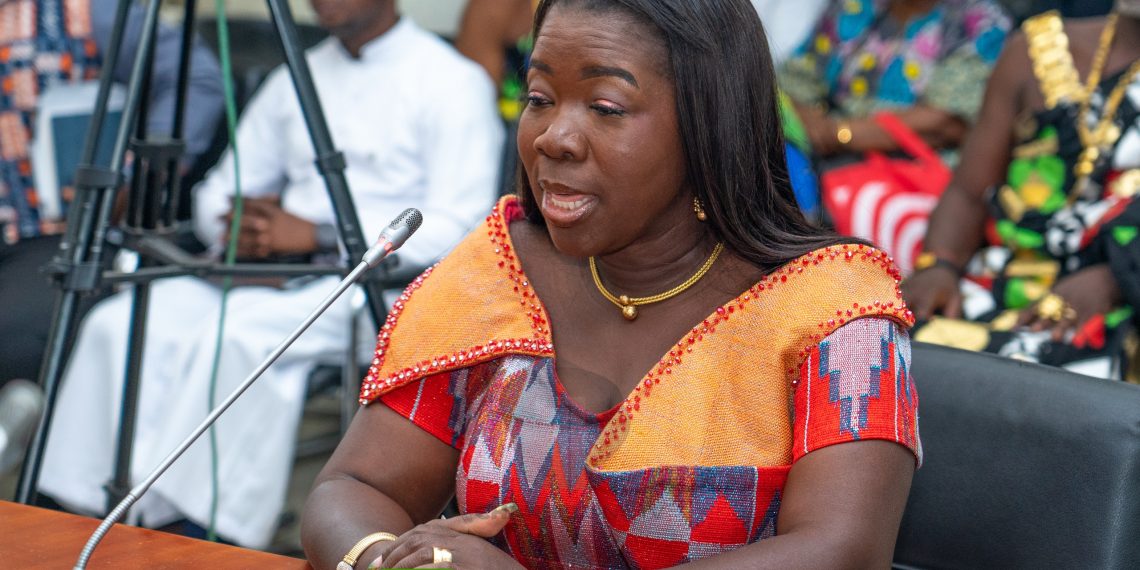
Elizabeth Ofosu-Adjare, the Minister-Designate for Trade, Agribusiness, and Industry, has proposed the implementation of a 24-hour economy as a solution to the challenges facing the One District, One Factory (1D1F) initiative. During her vetting by Parliament’s Appointments Committee, Ofosu-Adjare acknowledged the successes of the program and highlighted the obstacles it encounters.
She highlighted raw material shortages as a significant issue for agro-processing factories, compounded by limited access to capital. Despite government support through subsidized loans and a capped interest rate of 20%, market fluctuations raised interest rates to 55%, leaving a 15% funding gap for businesses. Additionally, the government’s inability to fulfil its promise of covering 10% of the subsidized interest rate further exacerbated the situation.
She suggested transitioning to a 24-hour economy as a practical solution. By maximizing productivity through extended operating hours, factories could address supply chain challenges and improve output. “1D1F is a program for Ghanaians established by the government. It has its advantages and disadvantages. On the positive side, the program has set up factories where individuals can add value to our raw materials. Although these agro-processing factories were initiated, they have struggled to meet expectations due to various challenges.”
“One of the challenges I have been briefed by the ministry is the fact that these factories lacked raw materials. We all know that one of the challenges in the agro-processing industry is the lack of raw materials. So, these companies have not processed the way the government wanted it to be.
Also, even though the government supported them with some inputs, they lacked capital or access to the same, and because of that, they have not been able to do their work as expected of them. If you look at the other 1D1F companies that signed onto the programme, their major challenge was the fact that the government capped their interest rate at 20% and promised to pay 10%, which was a very good programme.
“At some point, the interest rate soared to 55%. This created a problem for the company regarding who would cover the 15% difference, especially since they had already sold their products. Additionally, the government was unable to fulfill its promise to pay the extra 10% to these factories. These are the challenges faced by the One District, One Factory (1D1F) initiative. However, every problem presents an opportunity for solutions. It is encouraging that the initiative has begun, and now that we are aware of the challenges, we need to focus on how to address them. I believe the key to resolving the issues in the 1D1F initiative lies in developing a 24-hour economy,” she stated.
By: Patricia Boakye

