

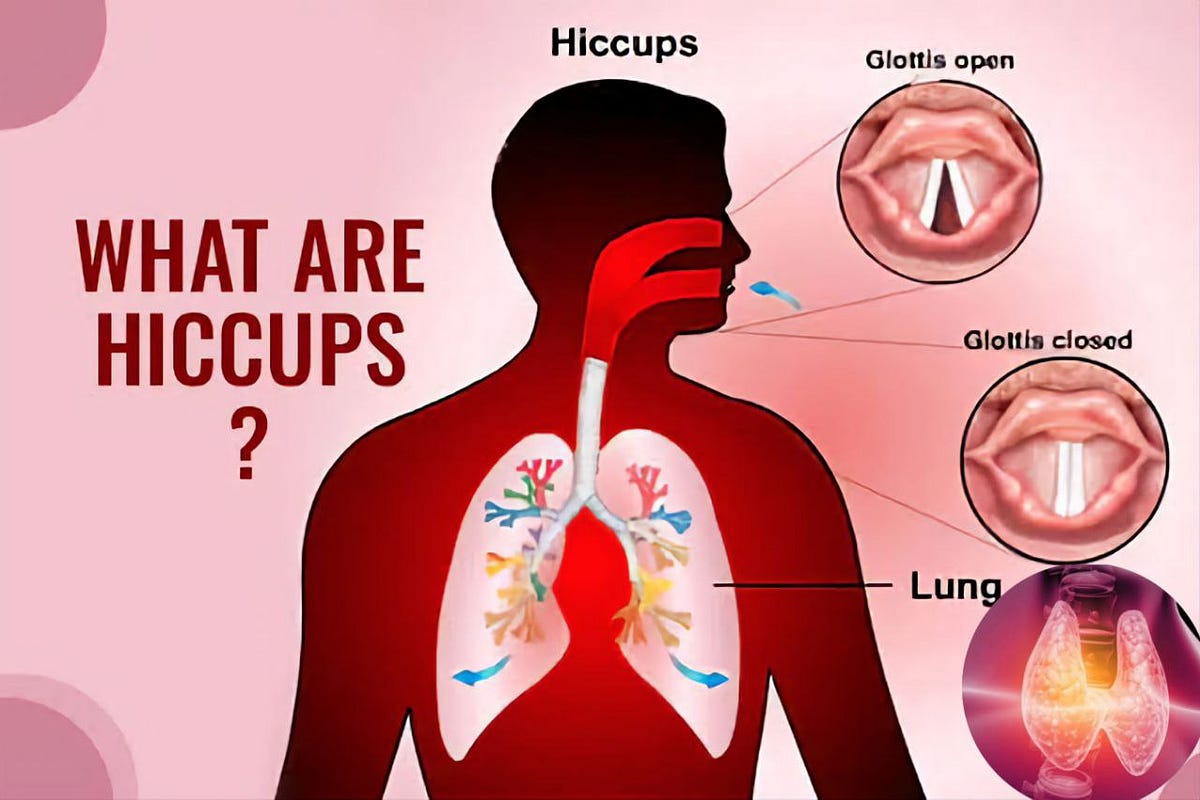
Every day hiccups are usually harmless and seldom cause complications, though they can be irritating. Relief is often found through simple home remedies, certain medications, massage techniques, or preventive measures. .
Why Do Hiccups Occur? Hiccups happen when the diaphragm—a muscle at the base of the lungs that controls breathing—contracts involuntarily. This sudden movement causes the vocal cords to snap shut while air rushes in, producing the familiar “hic” sound. Although the exact reason remains unclear, experts point to several common triggers that may set off this reflex.
Medications That Can Cause Hiccups
Certain types of medications also have the potential to trigger persistent hiccups. Common examples of these include:
Blood pressure medications, like methyldopa
Valium (diazepam), a benzodiazepine
Dexamethasone, a corticosteroid
Short-acting barbiturates, used to treat seizures, anxiety, insomnia, and muscle spasms
General anaesthesia, which is administered before a surgical procedure
Certain chemotherapy medications, which are taken to treat cancer
If you think a medication you’re taking is causing your hiccups, always check with a healthcare provider before stopping any prescribed treatment.
Hiccups After Eating
It’s common to experience brief hiccups after meals, particularly if you’ve eaten spicy foods, consumed too much, or eaten too quickly. This often occurs because swallowing air while eating or drinking can cause bloating, which in turn triggers hiccups. Overeating may also stretch the stomach, pressing against nearby organs such as the diaphragm and prompting hiccup reflexes. Experts further suggest that sudden temperature changes in the digestive system—like eating hot foods or consuming chilli peppers containing capsaicin—can irritate the diaphragm and cause involuntary contractions.
Hiccups after feeding are especially frequent in newborns. Natural reflexes are activated when babies swallow air during bottle-feeding or breastfeeding too quickly, which can irritate the diaphragm. Research also indicates that preterm infants may be more prone to hiccups compared to full-term babies.
Emotional Hiccups
In certain situations, strong emotions can trigger hiccups. Research indicates that feelings such as stress, anxiety, excitement, shock, or fear may set off this reflex in some individuals. Sudden emotional shifts are thought to stimulate the vagus nerve, which regulates involuntary body functions, and the phrenic nerves, which control the diaphragm. Overexcitement may also lead to swallowing excess air, further activating these nerves and resulting in hiccups.
Other Common Triggers of Hiccups
Other common causes of hiccups include:
Drinking carbonated beverages
Drinking alcohol
Abdominal surgery
Central nervous system disorders
How Long Do Hiccups Typically Last?
Most cases of hiccups are short-lived, though they do have the potential to be chronic (or long-lasting).11
Chang FY, Lu CL. Hiccup: mystery, nature and treatment. J Neurogastroenterol Motil. 2012;18(2):123-130. doi:10.5056/jnm.2012.18.2.123
Acute or mild hiccups usually go away within a few minutes. This type of hiccup lasts no more than 48 hours.1
Chronic (or intractable) hiccups last more than 48 hours and may persist if not treated or managed.
Ways to Make Them Stop
Though there aren’t any medically proven ways to stop hiccups, you can try some anecdotal tactics, many of which involve stimulating the vagus nerve. These include:
MedlinePlus. Hiccups.
Holding your breath or breathing into a paper bag for several seconds
Biting into or sucking on a lemon or another sour citrus fruit
Swallowing dry sugar or placing sugar underneath your tongue
Pulling on your tongue by grabbing the end of it with your fingers and gently tugging downward
Consuming something extremely cold, like sucking on crushed ice or eating a slushy
Performing the Valsalva maneuver, which involves breathing in, keeping your mouth and nose closed, then exhaling forcefully while bearing down for about 10 seconds
Curling up like a ball by pulling your knees into your chest for 30 to 60 seconds
Lightly massaging your eyeballs by closing your eyes and using your fingers to gently press down on the tops of your eyelids for several seconds at a time
Plugging your ears, then creating a pressure change by sipping water and swallowing
Prevention Tips
Most people will experience hiccups in their lifetime, though data shows that men are more likely to get them than women.
Though you may not always be able to prevent a bout of hiccups, a few lifestyle changes could help reduce the chances they will occur. For example:
Limit your consumption of carbonated beverages and alcohol
Eat slowly and mindfully
Stay upright for a few hours after eating a large meal
Try not to eat or drink anything cold immediately after consuming something hot
Avoid habits that cause you to swallow excess air, like chewing gum and smoking
For chronic hiccups, you may help prevent them by managing any underlying health conditions. Other treatment options for chronic hiccups include medications and surgical procedures.1
When to Contact a Healthcare Provider
Though they can be pretty annoying, occasional hiccups are usually not a cause for concern. However, chronic or frequent hiccups may indicate another health condition, such as one that affects the diaphragm or gastrointestinal tract. Consider checking with a healthcare provider if you notice your hiccups:
Last longer than a few days
Come back often
Impact your daily life
Source: Cristina Mutchler

