

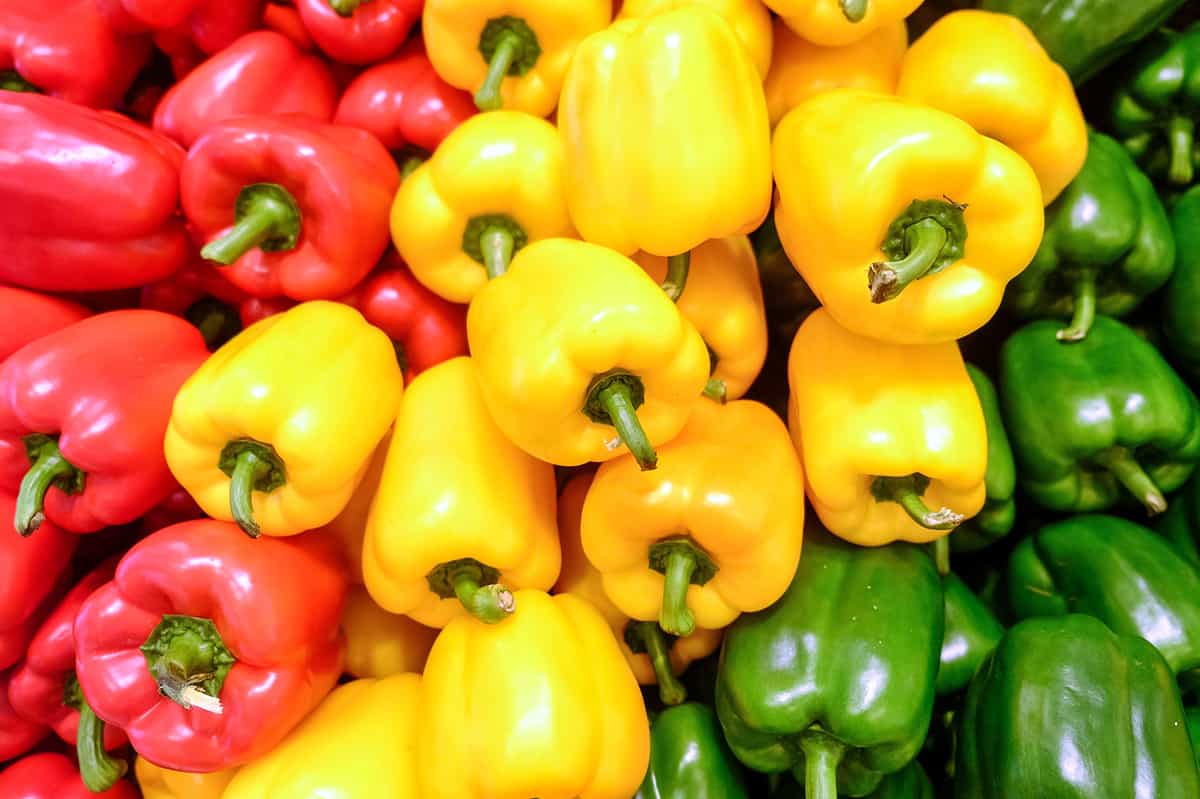
All bell peppers provide health benefits, but their colour indicates ripeness and nutritional maturity, both of which are important for immune support. Red bell peppers offer the most potent combination of immune-boosting nutrients. However, consuming a variety of bell pepper colours can help you benefit from a broader range of protective plant compounds.
How Bell Peppers Provide Immune Support
All bell peppers contain bioactive compounds that support immune health. Their immune benefits come from several complementary mechanisms rather than the strength of a single nutrient.
These substances include:
Vitamin C: All bell peppers are a good source of vitamin C, which is crucial for the proper functioning of white blood cells, maintaining the skin’s barrier, and neutralizing harmful free radicals that can cause cellular damage.
Diverse Carotenoids: Bell peppers contain several carotenoids, including beta-carotene, capsanthin, lutein, and zeaxanthin. These compounds help protect against oxidative damage and chronic inflammation. They also serve as precursors to vitamin A, which regulates immune responses.
Polyphenols and Flavonoids: Bell peppers are rich in polyphenols, which have strong antioxidant properties and act as scavengers of free radicals.
How Yellow/Orange Bell Peppers Support Immune Systems
Red bell peppers are often considered the strongest option for immune support, yet mid-ripened yellow and orange varieties also provide excellent benefits. Research has shown that some yellow peppers can surpass red peppers in vitamin C content, though fully matured red peppers generally exhibit superior antioxidant activity. Yellow and orange peppers, rich in phenolic compounds and carotenoids such as violaxanthin, demonstrate significant antioxidant potential during this stage of ripening. This makes them valuable alternatives to red peppers, especially when seeking nutritional variety.
Why Green Peppers Matter for Immunity
Green bell peppers are harvested earlier than fully ripe peppers. At this immature stage, green peppers may not necessarily have less value; rather, they offer different immune-supporting compounds compared to riper yellow or red peppers. While nutrient levels generally increase as peppers ripen, immature green peppers contain lower but still meaningful levels of immune-supporting vitamin C compared to their riper counterparts. Additionally, green peppers are particularly rich in lutein and zeaxanthin, carotenoids known for their anti-inflammatory and antioxidant properties that support immune function.
Source: verywellhealth.com

