

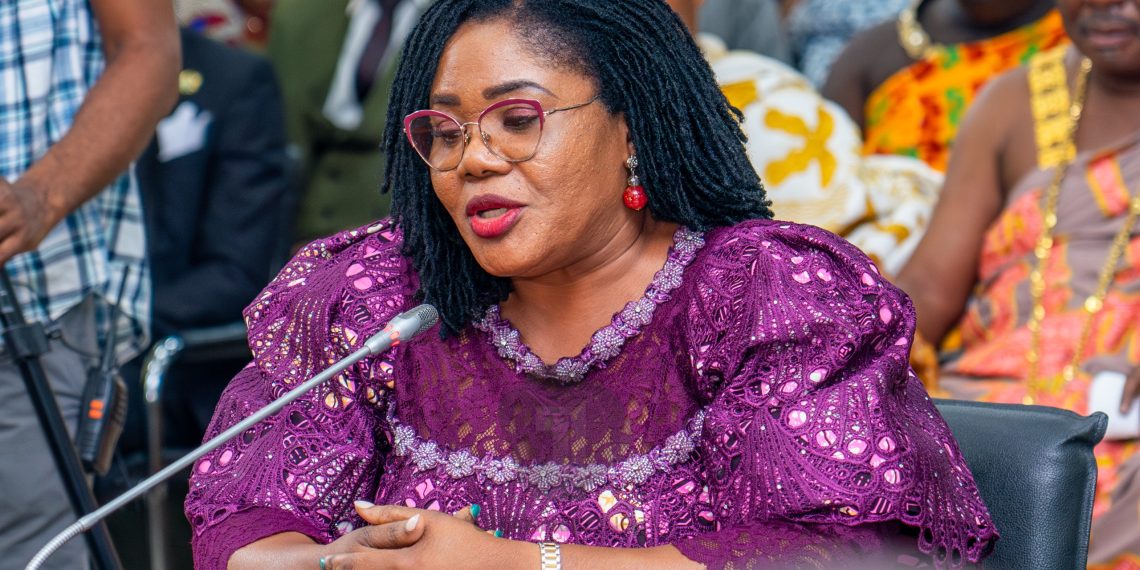
Naa Momo Lartey, the ministerial nominee for Gender, Children, and Social Protection, has pledged to incorporate Ghanaian family values into the country’s educational curriculum. This commitment was made during her vetting in Parliament on Wednesday, January 22, as part of her vision to reinforce cultural values and address social issues in Ghana.
Naa Momo Lartey emphasised that if approved, she would prioritise embedding acceptable Ghanaian family values into the educational system. This approach, she argued, would provide a sustainable foundation for the younger generation to understand and embrace the societal norms and cultural values cherished by Ghanaians.
As the constitution stands, and as the voices of the people of Ghana have loudly declared, I cannot go against that,” she affirmed during her vetting. “Beyond the enaction of the law is to imbibe it into our curricula so that the children will know some of these family values right from the beginning. I think it is more sustainable in addition to a law working,” she added.
Naa Momo Lartey’s comments are set against the backdrop of the ongoing national debate surrounding Ghana’s controversial anti-gay bill, officially known as the Human Sexual Rights and Family Values Bill. This bill, which has garnered attention both locally and internationally, seeks to criminalize activities that are perceived to promote or normalize LGBTQ+ lifestyles in Ghana.
Introduced in Parliament in 2021 by a bipartisan group of lawmakers led by Sam George, the bill aimed to reflect what its supporters viewed as the collective moral stance of Ghanaians. It proposed strict penalties for individuals and groups advocating for LGBTQ+ rights, as well as those who engage in same-sex relationships or support such causes. The bill received overwhelming support from many Ghanaians, who saw it as a necessary measure to preserve the country’s cultural and moral fabric.
Traditional leaders, religious groups, and a significant portion of the public expressed their endorsement, citing the need to protect the values that have long defined Ghanaian society. However, the bill also sparked international condemnation, with human rights organisations and foreign governments calling it a violation of fundamental human rights.
By: Kabah Atawoge

