

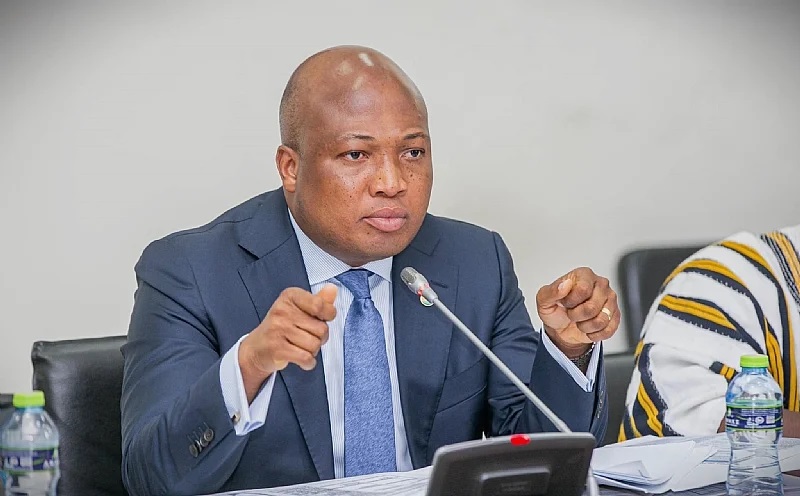
Foreign Affairs Minister Samuel Okudzeto Ablakwa has announced that Ghana has been excluded from the latest round of U.S. visa restrictions unveiled on Tuesday, December 16. The Trump administration disclosed plans to extend travel bans to 20 additional countries, along with the Palestinian Authority, effectively doubling the number of nations impacted by the stringent measures introduced earlier this year. Addressing a farewell parade on Wednesday, December 17, for Ghana Army Engineers departing to Jamaica to support reconstruction efforts, Minister Ablakwa emphasised that Ghana’s exemption reflects the strong and cordial ties between Accra and Washington
“Last night, in the latest round of US visa restrictions, which affected almost all our neighbours, President Trump once again exempted our brother country, the Republic of Ghana. “We are grateful to President Mahama for leading our foreign policy efforts,” he said. President Donald Trump has expanded a US travel ban, barring nationals of five additional countries and people travelling on Palestinian Authority-issued documents from entering the US.
The White House announced that the new travel restrictions, set to take effect on January 1, are aimed at “protecting the security of the United States.” Under the expanded measures, full-entry bans will apply to citizens of Burkina Faso, Mali, Niger, South Sudan, Syria, and holders of Palestinian Authority passports.
In addition, Laos and Sierra Leone—previously under partial restrictions—have been moved to the full ban list, while 15 other countries, including Nigeria, Tanzania, and Zimbabwe, now face partial restrictions. President Trump, who has intensified immigration controls since resuming office in January, defended the expansion as necessary due to what his administration described as weaknesses in foreign screening and vetting systems.
Officials pointed to high visa overstay rates, unreliable civil documentation, corruption, terrorist activity, and limited cooperation in repatriating deported nationals as justification for the policy.
Source: Samuel Ackom

