

The Deputy Director-General of the Narcotics Control Commission (NACOC) responsible for Enforcement, Control and Elimination, Alexander Twum-Barimah, has shed light on how some students are openly selling cannabis-infused products to their peers on campuses across Ghana. His remarks come amid renewed concerns over drug use and trafficking among young people, particularly within tertiary institutions, where the Commission warns the trade is becoming increasingly common.
The concerns follow NACOC’s recent arrest of five Central University students alleged to be involved in the production and sale of cannabis-laced items during a student event. University management has since indicated that it is cooperating with NACOC and security agencies in the ongoing investigations.
Preliminary findings suggest the suspects produced and sold cannabis-infused ice cream, sobolo, toffees, pepper, and eggs, in addition to dealing in raw cannabis. The students are currently assisting investigators.
Speaking in a radio interview monitored by Graphic Online on Accra-based Joy FM on Thursday morning [June 25, 2026, Mr Twum-Barimah said some students were taking advantage of campus activities to market cannabis-infused products to their colleagues.
He linked it to youthful exuberance “because it is very difficult to understand why someone who is in the university, who has gone there to go and learn law, engineering, marketing, name them, IT, the person decides to set up a stand during student activity time,” he said. “And what he or she is doing is not giving out books or flyers, educationally related to other qualities. Rather, he or she decides to sell an infused cannabis product.”
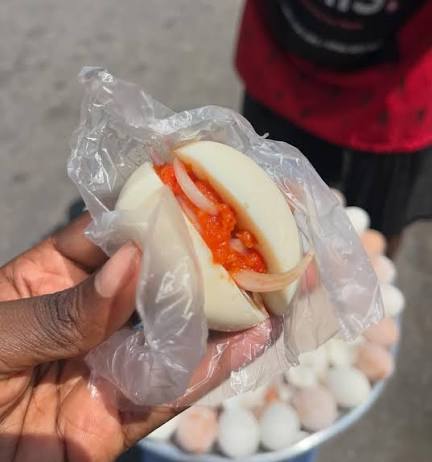
Mr Twum-Barimah said one of the products being sold was cannabis-infused ice cream. “So you go to that stand, you want to buy an ice cream and that ice cream that you are buying is cannabis infused,” he said. He also claimed that cannabis was being mixed into pepper served with boiled eggs. “To the extent that even egg and pepper, this egg and pepper that is sold by the roadside, has or had cannabis infused in it,” he said.
Asked whether the cannabis was mixed into the egg or the pepper, he replied: “It was in the pepper.” Mr Twum-Barimah said the Commission was increasingly concerned about the level of drug use and drug sales in tertiary institutions. “I can say without fear that the presence of drugs in our tertiary [institutions], what I mean by tertiary is the likes of the nurses in training schools, the likes of the teacher training schools, the likes of the universities, among others, is getting so high,” he said.
He said recent arrests had revealed a trend investigators did not initially expect. Mr Twum-Barimah said he had previously believed outsiders were responsible for bringing drugs onto campuses, but ongoing investigations suggested students themselves were increasingly involved in distributing them.
“From what we’ve just arrested some few days ago, [the Central University students], it turns out that even now the students are becoming the proponents or the leaders. The ones who are leading the sale of these things in the schools,” he said. He described the trend as worrying and questioned why students pursuing higher education would choose to engage in the sale of narcotic substances.
“How could a 21-year-old girl be a trader of cannabis-related products instead of learning law that she has gone to school to learn?” he asked. Mr Twum-Barimah said investigations were continuing to establish where the students obtained the drugs and who was supplying them. “We are going to uncover all those things,” he said.
He said public education remained the Commission’s first approach to tackling the problem. “The first plan is education,” he said, adding that NACOC had partnered with educational institutions to educate young people on the dangers of drug abuse. Mr Twum-Barimah added that the Commission was also working with rehabilitation centres to support people seeking treatment and recovery.
Source: Mohammed Ali

