

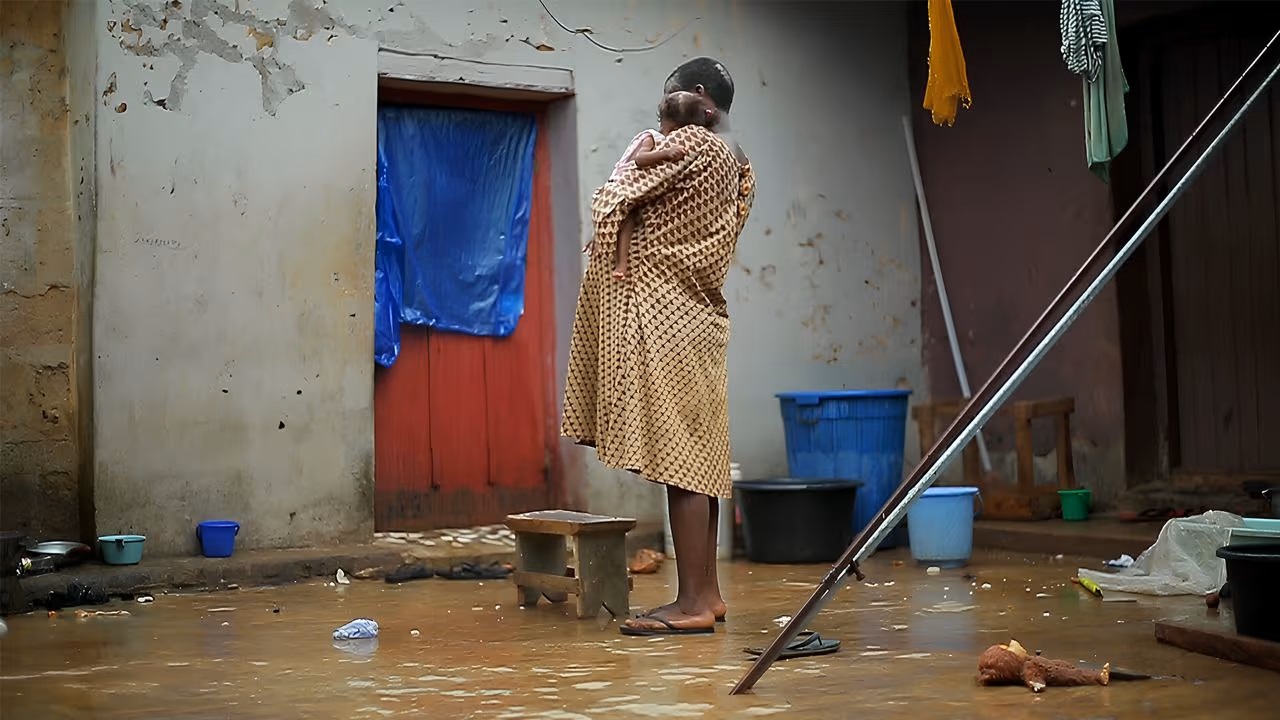
A disturbing practice has persisted in Akim Asafo, in the Eastern Region of Ghana, where some teachers make sexual advances toward female students. For years, some teachers, entrusted with shaping young minds, have been preying on female students, making sexual advances that shatter dreams and leave lasting scars.
Despite the outrage of disturbed residents, efforts to curb this abuse have met resistance, leaving victims like 15-year-old Kawe and Yaa trapped in a cycle of coercion and fear. Kawe, a pseudonym to protect her identity, was just 13 when her mathematics teacher at Asafo Methodist Basic School began targeting her. Now 15, she recounts an ordeal that began in Junior High School (JHS) Form 1. “I am always not happy,” she says, her voice heavy with distress. “A teacher is not making me happy. He keeps telling me he likes me.”
The teacher, a man in his 40s, persistently pursued Kawe, undeterred by her refusals in Forms 1 and 2. By Form 3, the pressure intensified. “He continued, so it made me lose focus,” she explains. Frightened and unsure, Kawe kept silent, fearing her mother’s reaction. “I was scared to tell my mother because she’s a bit impatient, and I was afraid she would shout at me.”
The coercion escalated when the teacher demanded nude photos. “He pressured me to send him nude photos of myself, and I said, ‘No, I can’t do that,’” Kawe recalls. But relentless persistence wore her down. “It pushed me to take a photo from my chest level without showing my face, and I sent it to him.”
The act marked a turning point. The teacher became “friendly,” sparing her the harsh punishments he meted out to others. Yet, the reprieve came at a cost. Kawe noticed a pattern: girls who complied with his demands were favored, while she endured frequent beatings, leaving bruises on her backside and body.
The abuse was not limited to words or photos. “He always wants to touch me, but I don’t agree,” Kawe says. “When he touches me, he tries to feel my breasts and backside. I mostly don’t allow him, but he forces me.” These assaults often occurred outside the classroom, masked by feigned friendliness to avoid suspicion. When Kawe reported him to another teacher, the retaliation was swift, a beating so severe it left her finger swollen, hindering her ability to do chores.
The teacher’s manipulation extended to academic sabotage. Struggling with mathematics, Kawe was an easy target. During terminal exams, he sent her exam questions via her mobile phone, a bribe to secure her compliance. “He told me not to show it to anybody,” she says. Though she shared the questions with friends unknowingly present, the teacher’s intent was clear, to exploit her vulnerability. “After writing the exam, he was trying to get me to do something bad,” Kawe reveals. “He wanted to force me to sleep with him, but I didn’t want that to happen.”
A Mother’s Discovery
Kawe’s mother, Adoble Mawusi, grew suspicious of the frequent calls and messages on her daughter’s phone. As an only child, Kawe was closely monitored, and Adoble’s instincts led her to investigate. “I asked her, ‘Whose teacher’s number is saved on your phone and calls you often? What’s going on between you two?’” Adoble recalls. Kawe remained silent, but the truth was realized when Adoble seized the phone.
The messages were damning: the teacher had requested nude photos, including images of Kawe’s private parts. “He kept asking her why she hadn’t sent the photos of her private parts, as he had requested,” Adoble says. Kawe had already sent a compromising photo, intercepted only because Adoble confiscated the phone in time. Confronted via a phone call, the teacher pleaded for forgiveness, admitting, “If someone did that to my child, I wouldn’t be happy about it.”
Adoble reported the case to the school and the Akim Asafo police station. The teacher visited their home, kneeling to beg for leniency, claiming disgrace would follow if the case reached court. “He said that even if the case went to the police station or to court, he would be disgraced, but in the end, nothing would happen,” Adoble recounts.
The family’s pursuit of justice was derailed by a personal tragedy, Adoble’s father passed away, and the case stalled. To date, no action has been taken. Kawe is not alone. Yaa, another 15-year-old student at the same school, shares a similar story.
Frustrated and exhausted, she dreams of becoming a nurse but feels her aspirations slipping away. “There’s a teacher who has his eyes on me, and it makes me unhappy at school,” she says. “Sometimes, I feel like dropping out, but I keep convincing myself not to, because I’m already in Form 3.”
The same mathematics teacher targeted Yaa since JHS 2, propositioning her after school and during vulnerable moments, such as when she was changing after a sports event. “While we were changing in an office, he came and said, ‘Eii, your breasts have grown bigger. If I tell you to come home and have sex with me, will you come?’” Yaa recalls. His harassment persisted, from inappropriate touching to explicit demands during vacations.
Yaa’s defiance came at a cost. Unable to answer a question in class, she was lashed until her hand swelled, forcing her to miss a week of school. “Because he keeps insisting that I visit his home and I keep refusing, that’s why he beat me like this until it became sore,” she says.
The teacher’s actions were calculated, targeting her thighs, neck, and waist in class under the guise of casual interaction. Yaa’s mother, Angela Ngobu, feels powerless. Impoverished and unwell, she struggles to advocate for her daughter. “Beating her to the extent where she gets bruises is disheartening,” Angela says.
“She always tells me about the same teacher, but when you keep following up on these cases, sometimes it can bring more trouble.” Fearing retaliation and her daughter being blamed, Angela advises Yaa to endure until she completes JHS.
A Community in Crisis
The abuse in Akim Asafo extends beyond the classroom. A walk through the town reveals a troubling sight: teenage girls, some pregnant, others cradling infants, their education abandoned. Akosua, 15, is a stark example. Heavily pregnant with her second child and caring for a six-month-old, she became a mother at 14.
The father, an older man, denied responsibility, leaving Akosua’s mother, Rose Awoah, to shoulder the burden. “Everything for the hospital expenses is on me,” Rose says, her voice strained. “Right now, as she’s standing here, she’s hungry.” Patience, another dropout, gave birth at 16 and now supports two children by carrying water for neighbours, earning a meager GHS 60 for filling three barrels.
“What my children will eat is what matters most to me,” she says. Like Akosua, she has no interest in returning to school, her dreams buried under the weight of survival. The prevalence of teenage pregnancy is alarming, with community leaders struggling to address the crisis. A teacher at a local school, speaking anonymously, revealed that such misconduct is widespread.
“Most of my colleagues get the students pregnant and assist them in abortion,” he says, frustrated by their refusal to heed his warnings. The Ghana Education Service (GES) Headteachers’ Handbook (2010) is clear: teachers must not exploit their authority, as it undermines the trust between schools and communities.
Sexual affairs with students, especially those resulting in pregnancy or abortion, warrant immediate dismissal, while lesser offenses incur unpaid suspension or disciplinary transfer. Ghana’s Children’s Act and child protection laws reinforce these mandates, yet enforcement in Akim Asafo remains elusive.
When confronted, the accused mathematics teacher denied the allegations, claiming, “What the girls are saying is untrue.” However, WhatsApp chats and a recorded plea for forgiveness contradict his denial. “They mentioned my name? I did not do that,” he said.
The lack of action from the Akim Asafo police station and school authorities shows a systemic failure to protect vulnerable students.
Determined to seek justice, I reported the situation to the Domestic Violence and Victim Support Unit (DOVVSU) in Accra. A team from DOVVSU, joined by officers from Kyebi police station, launched an investigation, visiting the homes of Kawe and Yaa. The wheels of justice are turning, but for these girls, the scars; physical and emotional may never fully heal.
In Akim Asafo, predators hide behind chalkboards, exploiting their authority to rob young girls of their innocence and aspirations. Kawe, Yaa, Akosua, and countless others bear the weight of a community’s silence and a system’s inaction. As teenage pregnancies rise and dreams fade, the question remains: who will protect these girls?
The GES, law enforcement, and community leaders must act decisively. Schools should implement stricter oversight, including anonymous reporting channels for students. DOVVSU and child welfare organizations must prioritize cases like these, ensuring perpetrators face consequences.
Parents, though constrained by poverty or fear, need support to advocate for their children. Health professionals and counselors can help address the trauma and health risks faced by victims, while community leaders must challenge cultural norms that enable such abuse.
In Akim Asafo, the fight for accountability continues. This is not just a story of stolen innocence but a call to protect every girl who dares to dream.
Source: Godwin Asediba (MG News)

