

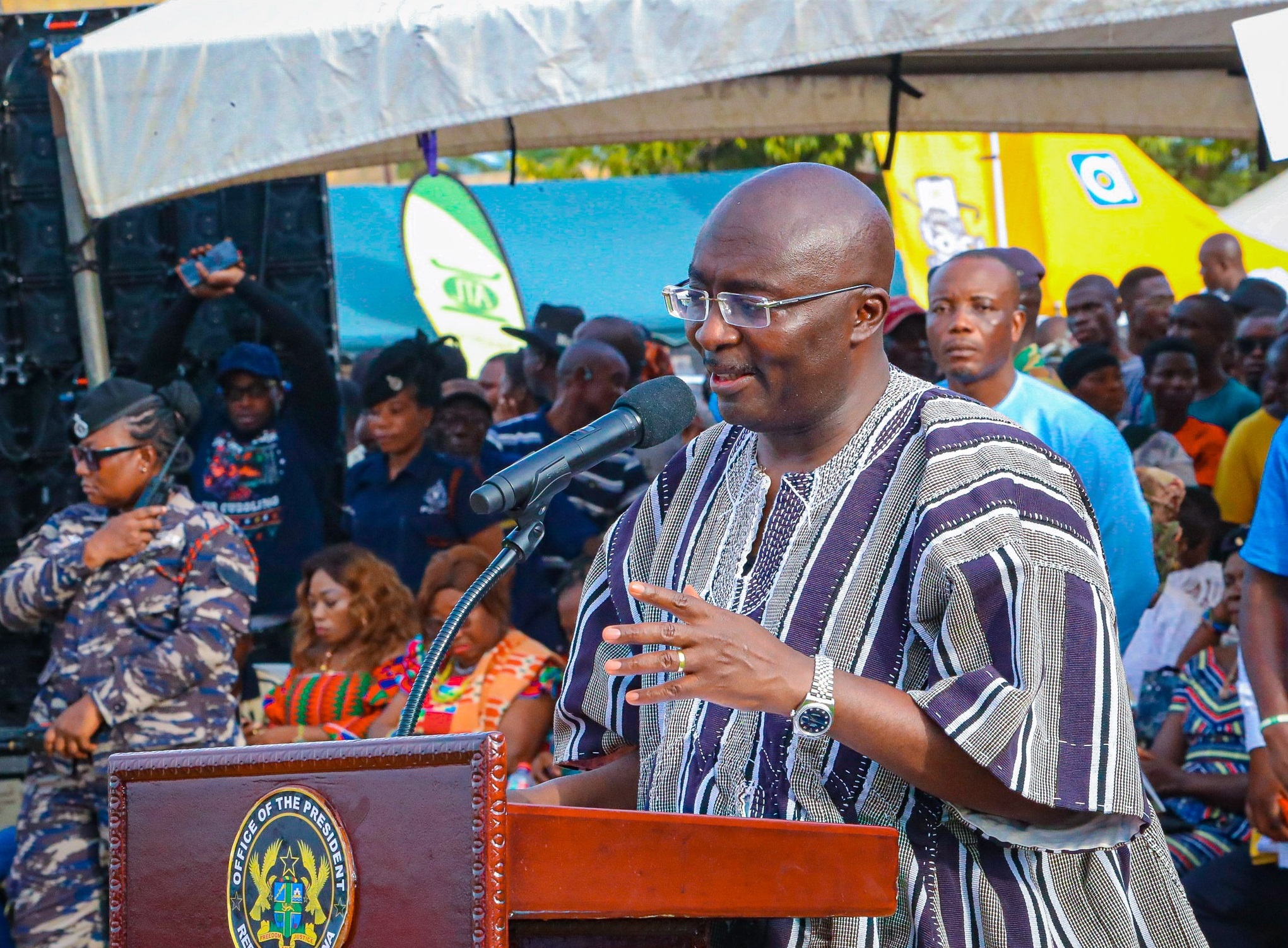
Former Vice President Dr. Mahamudu Bawumia has dismissed claims that the National Democratic Congress (NDC) deserves any credit for the recent improvements in the value of the cedi. The flagbearer for NPP 2024 insists that the NDC government has not implemented any policies that could have positively influenced the currency’s performance. During an interaction with the Young Executive Forum (YEF) in London, as part of his Thank You Tour of the UK, the former Deputy Governor of the Bank of Ghana challenged the foundation of these claims.
“If you are to ask the NDC to point out exactly what policy they have implemented that has resulted in the appreciation of the cedi. “They cannot tell you one that has been implemented, not sort of talked about, but implemented,” Dr. Bawumia stated. “They cannot tell you one such policy.” He explained that the NDC had only recently passed its budget and had not undertaken any real expenditure or projects that could influence the currency’s appreciation.
“They only approved their budget in March, and they haven’t even issued any contracts or made payments for anything, essentially. Therefore, you cannot attribute the current situation with the currency to any policy they have implemented. No such policy has been enacted that has had this kind of impact yet,” he stated. Dr. Bawumia added that the current gains of the cedi are due to strategic policies introduced during his time in government, particularly the gold purchase program.
“For me, we had anticipated the impact of gold on this economy. I talked about it when we got into dire straits in 2022, and I said that when you look at Ghana being the largest gold producer in Africa, our reserves of gold at that time was 8.7 tons. “You look at the US, they have 8000 tons, and the UK has over 2000 tons. Same with France, and so it gives confidence in your currency,” he noted.
He explained that gold offered a domestic path to build reserves without needing to export. “You don’t need to export to get gold, you need to export cocoa to get foreign exchange, timber, oil, you need to turn it abroad. But as for gold, you just need to dig it or pay for it with cedis. So it was a much easier way to do it.” He revealed that through the gold purchase programme, the central bank had built up $5 billion worth of reserves in two years.
“Remember, we are going to the IMF just for $3 billion, and going through all sorts of hoops. But in two years, we had bought $5 billion. So we increased the gold reserves in Ghana from 8.7 tons to 30 tons.” “65 years after independence, we only had 8.7 tons, but in just two years, we went to 30, and so that is a big backing for the currency,” he added.
“They have been in office so far, they’ve not even increased it by one ton, not a single one ton.” Dr. Bawumia further pointed to global currency trends and domestic expenditure controls as other reasons behind the current exchange rate dynamics. “The US dollar itself is on the decline globally, and that has also strengthened,” he said.
“If you go to Zambia, for example, the Kwacha has gained a lot of ground also because you have the US dollar declining in value.” He added that the NDC’s lack of spending is also having a temporary effect on the cedi. “They are not spending. If you are managing an economy, you have to pay your bills. They are not paying IPPs, for example. This is why the dumsor is so acute, and they are not paying contractors. When you are not spending, there is less pressure on your currency.”
He concluded that the programmes he led, including the gold for oil initiative, were essential in preventing an economic collapse. “If we had not instituted the gold purchase program as well as the gold for oil program, our economy would have collapsed. Where would we have gotten $5 billion just to support the economy? You wouldn’t have gotten it.”
“I believe that it is clear that what we put in place, and I believe this is going to be there for a long time. What we have put in place should help us maintain stability in the currency, but we’ll see how they manage it going down the road,” he said.
By: Abubakar Ibrahim

