

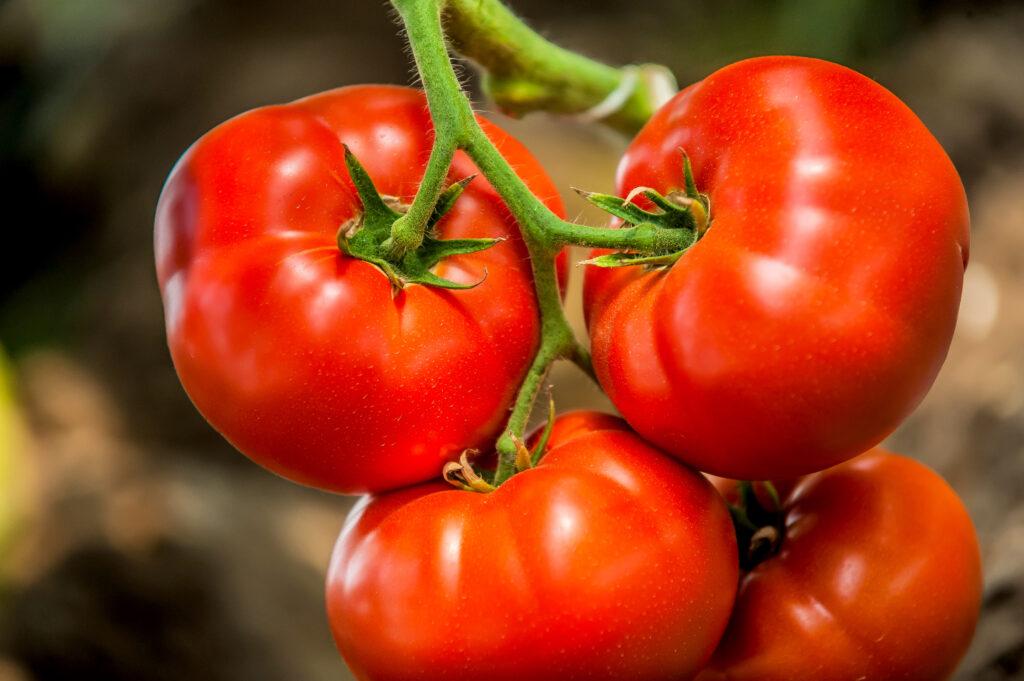
The Government has begun processes to procure 13 tonnes of improved tomato seed varieties for distribution to farmers nationwide. These seeds, which offer higher yields and longer shelf life, are expected to boost local tomato production. Announcing the initiative at a media briefing in Accra, the Minister of Food and Agriculture, Eric Opoku, explained that the intervention is part of efforts to minimise import dependence and strengthen domestic supply. He noted that the measure has become necessary due to the widening gap between national demand and local output.
Demand outstrips production
Ghana’s annual tomato demand is estimated at about 806,000 tonnes, while current production stands at roughly 510,000 tonnes, leaving a deficit of nearly 300,000 tonnes that is often met through imports. The Minister of Food and Agriculture, Eric Opoku, expressed concern that beyond the supply gap, low productivity per hectare remains a major challenge. He noted that while countries such as Burkina Faso achieve yields of around 18 tonnes per hectare, Ghana averages only eight tonnes.
Mr. Opoku emphasised that addressing this issue requires a shift from expanding land under cultivation to improving yields through better seed varieties and enhanced farming practices. “We must prioritise the development of high-yielding varieties suited to our ecological conditions,” he said, expressing optimism that ongoing collaboration with research institutions could help raise yields to at least 15 tonnes per hectare.
He further explained that although Ghana cultivates significant land areas for tomato production, output remains low due to reliance on rain-fed agriculture and limited irrigation infrastructure. To tackle this, the government is expanding irrigation systems across key farming zones to support year-round production.
Vegetable cultivation
Under the Vegetable Development Programme, irrigation projects are underway in parts of the Ahafo and Bono regions, where approximately 60 hectares of land in each area are being developed with water supply systems to support continuous cultivation. The Minister of Food and Agriculture, Eric Opoku, noted that additional interventions include the rehabilitation of irrigation facilities at Dawhenya, with 500 hectares designated for tomato production, and Akumadan, where 100 hectares are being prepared for immediate use.
He further disclosed that about 250 boreholes are being drilled across the country to support vegetable farming, particularly in dry-season production zones. Mr Opoku emphasised that reliable access to water will not only boost yields but also reduce farmers’ dependence on unpredictable rainfall patterns.
Irrigation
Mr Opoku said the country had adequate arable land, but productivity must be maximised through improved inputs and efficient water management systems. In addition to irrigation, he said, the government was facilitating market access by linking farmers directly to buyers to reduce post-harvest losses, which currently accounted for about 30 per cent of production. He said the combined interventions of improved seeds, expanded irrigation, input support and market linkages would significantly increase output and stabilise supply. Mr Opoku assured the public that the measures being implemented would not only address the current shortfall but also position Ghana to achieve long-term self-sufficiency in tomato production.
Source: Severious Kale-Dery

