

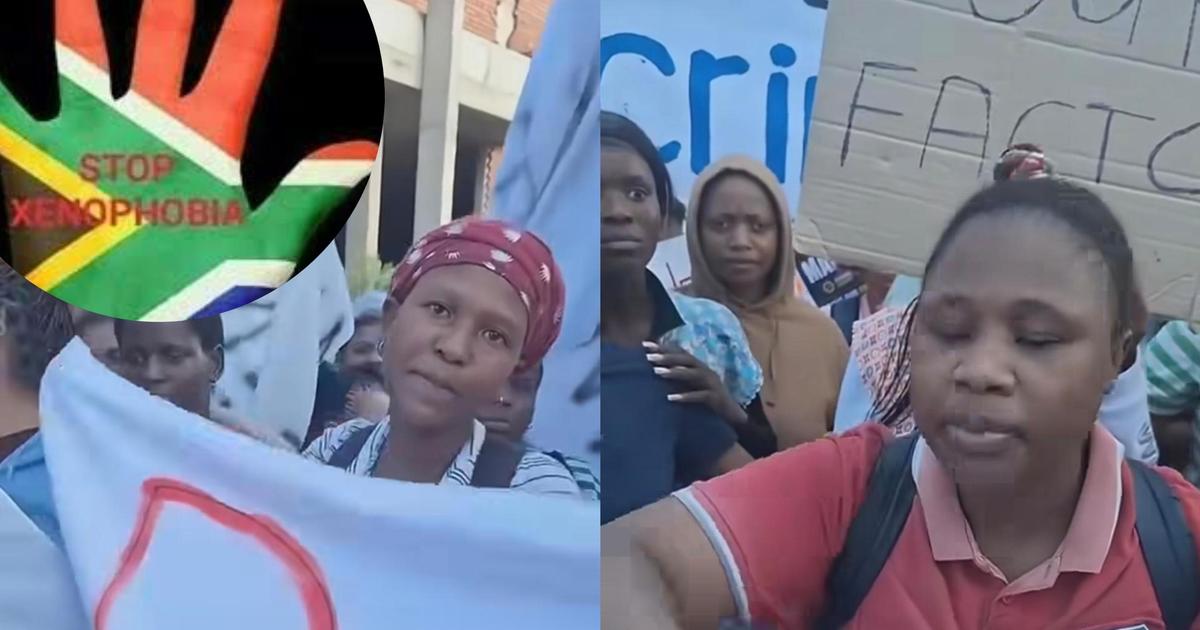
A group of South African factory workers has staged protests against the ongoing xenophobic crackdown on foreign nationals, following a wave of attacks and measures that have forced many immigrants, including Ghanaians, to leave the country.
The demonstrators argued that several sectors of the economy depend heavily on the contributions of foreign workers and entrepreneurs, warning that their absence is already disrupting business operations and livelihoods. They noted that many of those who have departed were employers, investors, and skilled professionals whose enterprises created jobs and supported local economic growth.
Taking to the streets, the workers voiced strong opposition to the anti‑immigrant campaign and urged President Cyril Ramaphosa to act swiftly to restore confidence among foreign nationals and encourage their return. Some protesters further cautioned that continued hostility could have severe consequences for industries reliant on foreign expertise, particularly in manufacturing and garment production.
One demonstrator said South Africans have benefited greatly from the presence of foreign nationals, stressing that many local workers acquired specialised skills through working alongside them. “We say no to xenophobia. We need foreigners back. Without foreigners, we are nothing. All we know as South Africans is how to cut fabric, but the foreigners know how to make the garments. Without them, we are nothing.
“Mr. Ramaphosa, you cannot chase foreigners away because they are part of us. If you send them away, we will be left with nothing. The factories are going to close, and we are going to become poorer. We have children, and what are our children going to eat? We need foreigners,” she said.
The protest comes amid growing tensions fuelled by an anti-immigrant campaign led by Jacinta and her supporters, who accuse foreign nationals of taking jobs from South Africans and have demanded that they leave the country. Meanwhile, the xenophobic attacks have prompted the Ghanaian government to evacuate more than 1000 of its citizens from South Africa as efforts continue to ensure their safety and well-being.
Source: Patricia Boakye

