

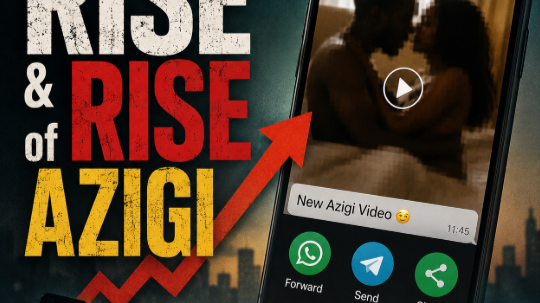
There was once a time when uncovering scandals in Ghana required significant effort. Journalists had to investigate thoroughly, interview witnesses, gather documents, and sometimes even hide behind walls to get the story. Those challenging days are behind us now. We have entered the era of Azigi.
For those respectable citizens who may not be familiar with the term and are reading this article with a mix of curiosity and suspicion, Azigi refers to the Republic’s latest addition to modern vocabulary: leaked intimate videos. Recently, it seems that Azigi has experienced something of a surge in activity.
First came the DJ.
Before the Republic had finished examining that episode with the thoroughness normally reserved for a presidential commission of inquiry, the nurse reported for duty. “Who has the link?”
At this rate, the Ghana Statistical Service may soon have to add Azigi to the Consumer Price Index. Food prices rise. Transport fares rise. The dollar rises and falls. But Azigi appears determined to maintain impressive year-on-year growth. What fascinates me, however, is not that adults sometimes record themselves doing what adults have been doing since Adam discovered that Eve was not his sister.
Human beings will be human beings.
Then came the policewoman.
And just when we thought perhaps the national leaking tap had finally been repaired, an actor entered the theatre.
Different people. Different professions. Different circumstances.
Same Republic.
Same audience.
Same urgent question:
The real wonder is what happens to the Ghanaian immediately Azigi enters circulation.
At 7:00 a.m., he hears the news.
At 7:03, he asks whether it is true.
At 7:05, he requests the link.
By 7:15, having conducted an exhaustive peer-reviewed examination of the evidence, he returns to Facebook deeply worried about the moral decay of Ghana.
By 7:30, he is quoting Scripture.
Wonderful country.
The same fingers that tapped Forward just ten minutes earlier are now pointing accusingly at the people in the video. Our elders remind us that when you point one finger at your neighbour, the rest turn back at you. The smartphone has updated the proverb: those remaining fingers are busy pressing Send.
This is where the Azigi economy becomes intriguing. Like every thriving industry, it runs on a supply chain. Azigi is no exception: there is the original source, the wholesaler, the WhatsApp distributor, the Telegram branch manager—and finally, that indispensable Ghanaian researcher who appears beneath every post.
“Please inbox me. I want to confirm something.”
Confirm what, Professor?
After confirmation comes the National Court of Morality.
The pastors arrive.
The relationship experts arrive.
The aunties arrive.
Men who spent half the morning searching for Azigi suddenly discover Sodom and Gomorrah. People who forwarded it to six WhatsApp groups begin mourning the disappearance of African values.
Everybody condemns the fire.
Nobody remembers bringing firewood.
But somewhere beneath the laughter lies an uncomfortable truth.
Regardless of any foolish decisions made privately, consenting to intimacy does not equate to consenting to widespread public exposure. Even agreeing to be recorded does not imply agreement to become the focal point of fourteen million smartphones. In fact, Ghana’s Cybersecurity Act addresses the issue of distributing intimate images without consent. Therefore, while Brother Kwame may be eagerly sharing Azigi “for educational purposes,” the law could be quietly preparing to intervene.
And the future is even more frightening.
Artificial intelligence means tomorrow’s Azigi may not even be real. A person’s face can be manipulated into intimate imagery convincingly enough for social media to hold the funeral of their reputation before the truth has finished putting on its shoes. By the time experts establish that the video was fake, Ghana would have watched it, forwarded it, analysed it, preached about it and moved on to Azigi Number Five.
Our elders teach that when your neighbour’s beard catches fire, you should keep water close to yours. Modern Ghana has added a twist to this wisdom: we first reach for our phones to record the burning beard.
Perhaps, then, the real scandal is not simply that Azigi continues to leak. The deeper scandal lies in the vast crowd permanently gathered beneath the leaking tap—bowls raised eagerly, clamouring for their share—only to return home and complain that the water is dirty.
So the next time Azigi surfaces and that familiar question begins its journey across WhatsApp…
“Who has the link?”
perhaps we should ask another question first:
What exactly have we become?
Source: Jimmy Aglah

