

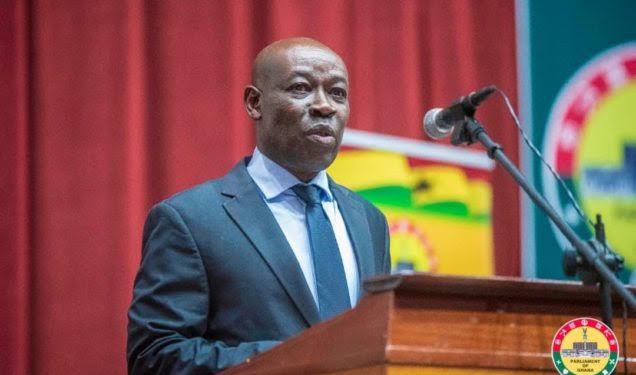
Private legal practitioner Thaddeus Sory has urged lawyers to rely on established legal procedures when challenging judicial decisions, rather than resorting to media campaigns, public pressure, or boycotts. He stressed that disagreements with rulings by judges or the Chief Justice should be pursued through the appropriate legal channels, warning that public commentary risks inflaming tensions without resolving the substantive issues.
His remarks follow controversy over Chief Justice Paul Baffoe‑Bonnie’s directive authorising selected High Court judges to sit during the legal vacation. Lawyers representing former National Signals Bureau Director‑General Kwabena Adu‑Boahene and former National Food Buffer Stock Company Chief Executive Officer Hanan Abdul‑Wahab have opposed the arrangement, requesting that their cases be deferred until October, when the new legal year begins.
Speaking on the KSM Show on Monday, August 17, 2026, Mr Sory noted that lawyers dissatisfied with decisions affecting their cases have several legal remedies available. He advised that concerns about directives should first be raised within the judicial system and formally presented to the judge handling the matter.
According to him, a lawyer who believes a judge has acted unfairly can challenge the decision through the appropriate legal processes rather than turning immediately to the media. He added that lawyers could also challenge decisions through an appeal or other legal proceedings, where appropriate.
“The judge is going to write the ruling. You can challenge it,” he said. Mr Sory also questioned the practice of making allegations of political interference or bias before available legal remedies have been exhausted. “If you are not happy with the Chief Justice’s decision, you can actually go and meet up with the Chief Justice and say, look, as parties, we want to come and discuss this directive,” he said.
He urged lawyers to engage the system before concluding that an administrative decision was motivated by political interests. “Why don’t we engage the system in the appropriate way?” he asked. According to him, public statements on sensitive court matters can sometimes heighten emotions rather than contribute to resolving the dispute.
“Maybe the idea is to just inflame passions to get people to think the way they want them to think,” he said.
Source: William Narh

