

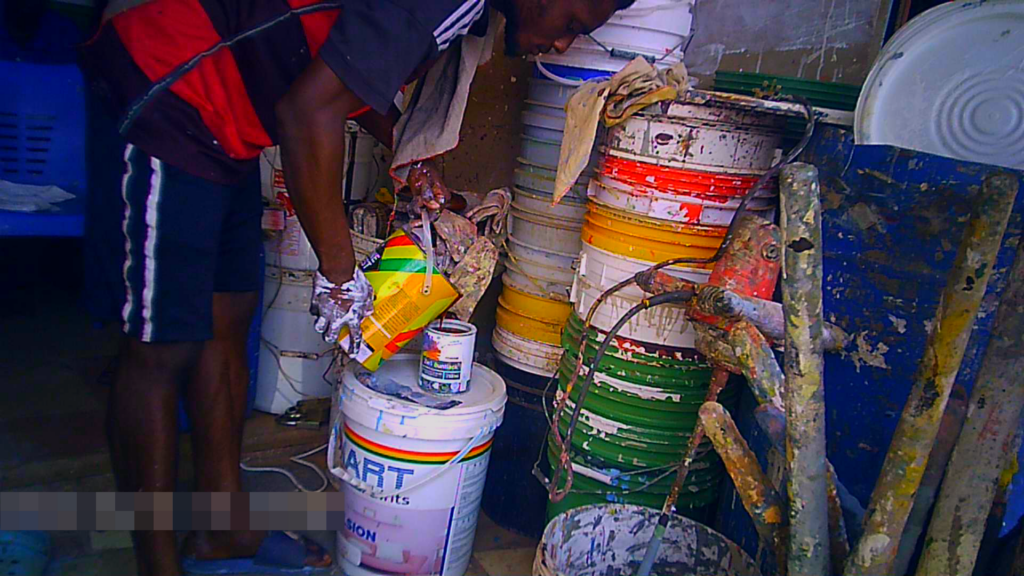
Research indicates that exposure to lead-based paint can lead to significant cognitive impairments, impacting learning abilities, memory, and overall brain development. In JoyNews’ recent documentary titled “American Paints: The Painter’s Galamsey,” a concerning discovery has been made regarding the prevalence of high-lead paints sold in the Ghanaian market. A pivotal study conducted by American researchers in partnership with Ghana’s regulatory agencies found alarmingly high levels of lead in paints available locally.
Out of 46 paint samples analyzed, 15 contained lead levels far above the acceptable limit of 90 parts per million (ppm). Shockingly, this marks a sharp increase from 2023, when only six out of 59 samples tested exceeded safe lead levels. Even more concerning, some paints that were previously below the 90 ppm threshold have now surpassed it, with the highest lead content found reaching a staggering 200,000 ppm.
Households using these paints unknowingly expose pregnant women and children to severe health risks, including irreversible brain damage and other neurological disorders. The devastating consequences of lead poisoning make it critical for consumers to be aware of the hidden dangers lurking in these products.
Anecdotal evidence suggests that the affordability of certain imported paints, compared to locally manufactured options, may be driving their increasing popularity. However, these paints lack certification from the Ghana Standards Authority. According to the Authority’s CEO, Prof. Alex Dodoo, these so-called “American paints” are not regulated, creating a significant gap in oversight.
The situation is further complicated by a regulatory turf war. The Ghana Standards Authority claims that the responsibility for regulating these imported paints has been transferred to the Food and Drugs Authority (FDA), making it challenging to enforce safety standards. Meanwhile, the FDA asserts that it has no jurisdiction over imported paints, leaving the market without proper oversight.
Freight forwarding agents have revealed that some importers collaborate with customs officials to smuggle hazardous paints into the country, evading statutory duties and bypassing regulatory scrutiny. Once these paints enter the local market, monitoring becomes nearly impossible. Jessica Nkansah, Director of the Inspectorate Directorate at the Ghana Standards Authority, has raised concerns over the conditions under which these paints are processed.
Environmental Protection Agency (EPA) Technical Officer on Lead, Lovelace Sarpong, noted that while some local manufacturers have improved their lead standards since a 2013 United Nations Environment Programme investigation, these uncertified imports remain a growing threat. Clearly, the label “American Paints” is an illusion – a deceptive branding tactic that lures unsuspecting Ghanaians into purchasing cheap yet harmful products. Without urgent intervention, these toxic paints will continue to endanger lives, especially those of children, the most vulnerable victims of lead poisoning.
By: Kwetey Nartey

