

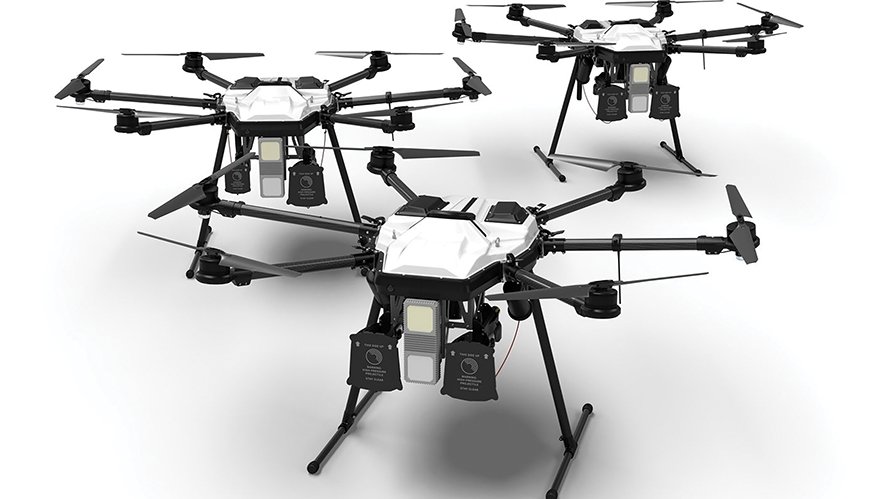
A pilot programme deploying drones and artificial intelligence to detect mosquito breeding sites has reduced malaria cases by nearly half in parts of Ghana’s Eastern Region, marking a potential breakthrough in the country’s elimination efforts. At the Asuom Health Centre in Kwaebibirem Municipality—where malaria has historically dominated outpatient visits—health workers reported a sharp decline in cases during the intervention.
“It is our number one burden,” noted Philip Penti, Malaria Focal Person at the Ghana Health Service. “But we saw fewer cases during the pilot period compared to the same time the previous year.”
Within just four months, outpatient malaria cases dropped by almost half, according to health officials. They attributed the decline to a targeted Larval Source Management (LSM) strategy enhanced by drone technology and artificial intelligence. Ghana continues to battle a high malaria burden despite recent gains. The World Health Organisation estimates the country recorded about 6.6 million cases and 11,464 deaths in 2023.
Under Ghana’s National Malaria Elimination Strategic Plan (2024–2028), authorities aim to reduce malaria deaths by 90% and case incidence by 50%, with elimination targeted in selected low-burden districts. Central to the new approach is identifying and eliminating mosquito breeding grounds more precisely. The drone-based system, led by Sora Technology, maps target areas using satellite data and aerial imaging.
“We use drones with RGB cameras to capture high-resolution images of the visible spectrum,” said the company’s chief executive, Yosuke Kaneko. “These images are processed into a high-resolution map, which we use to identify water bodies.” Artificial intelligence is then used to analyse environmental conditions and classify water bodies by mosquito breeding risk, allowing field teams to focus larviciding efforts on high-risk areas.
“The result is a data-driven, resource-efficient intervention,” Kaneko said. The system marks a shift from traditional methods, where field officers manually searched for stagnant water and applied larvicides — a process practitioners say was labour-intensive and often missed key breeding sites.
“The mapping is especially tedious. Officers can miss breeding grounds entirely,” said Isaac Owusu Mantey, a local partner involved in the programme. A comparative study across eight communities — four using the drone system and four using manual methods — found the technology significantly improved efficiency.
Professor Godfred Bokpin, who led the study, said the drone-based approach identified more than 200% more high-risk water bodies while using 50–75% less insecticide and labour. “This shows improved targeting and efficiency. If drones can be upgraded to also spray, the cost-effectiveness and impact would increase dramatically,” he said.
Although the pilot period was relatively short, health facilities in intervention areas recorded notable declines in malaria cases, prompting calls for wider adoption. “Unless Ghana revises its current LSM strategy, drone technology remains the most efficient and cost-effective method,” Bokpin said.
Samuel Hackman, Executive Secretary of the Ghana Country Coordinating Mechanism of the Global Fund, described the initiative as “critical in the fight against malaria.” He emphasised that targeted approaches reduce waste and save resources, noting: “I have seen Sora’s work in high-burden areas in southern Ghana, and the results are impressive. Scaling this across West Africa could be transformative.”
With global funding for malaria programmes under strain, Hackman stressed the importance of cost-effective innovations. “Low-cost, high-impact solutions like this are exactly what we need,” he said.
Experts, however, urged caution, highlighting the need for compliance with national regulations. Mawuli Gbekor of the Environmental Protection Authority explained that drone operators must adhere to aviation and data protection laws. “Drones can capture everything, including private spaces. Operators must secure consent from local authorities and communities and ensure data is used solely for the intended purposes,” he noted.
The pilot underscores the growing role of technology in public health, as Ghana seeks to integrate innovation, investment, and community participation in its long-term drive toward malaria elimination.
GNA

