

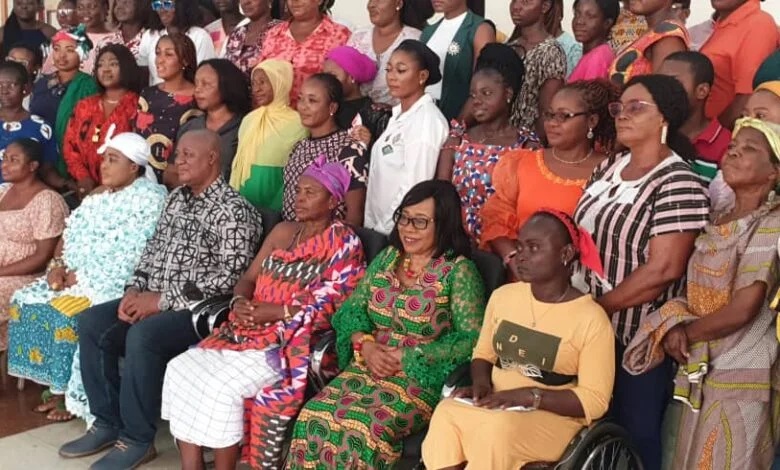
New research has shown that violence against women in politics remains a significant barrier to democratic participation in Ghana, particularly at the local governance level, as the country prepares for the 2027 district elections. The findings were shared at a roundtable in Accra convened by the United Nations Development Programme (UNDP) Ghana and the Nordic Africa Institute (NAI), which brought together researchers, policymakers, diplomats, development partners, and civil society representatives to examine structural obstacles to women’s political engagement.
Presenting the study, Diana Højlund Madsen highlighted that intimidation and violence directed at women in politics are systemic challenges that deter many from seeking office. She drew attention to insights from the newly published book Making Politics Safer – Mitigating Violence against Women in Politics in Africa: Insights from Ghana, Kenya and Zimbabwe, which is based on 134 interviews with politically active women. “In Ghana, only 4.1 per cent of district assembly members are women. If we want inclusive local governance, we must not only focus on bringing women into politics, but also examine the conditions under which they participate,” she said.
The study found that women in politics frequently face physical, psychological, sexual, and economic intimidation, as well as harassment and moral accusations designed to discourage participation. Gendered electoral violence often includes sexualised harassment, threats against family members, online abuse, and other tactics that reinforce male-dominated political systems. While measures such as gender quotas and policy reforms have increased representation in some contexts, the research emphasised that numbers alone do not guarantee meaningful participation if political environments remain unsafe.
Complementing the comparative study, UNDP Ghana shared findings from its work on women in local governance and peacebuilding, highlighting the experiences of women in northern Ghana. The assessment documented the challenges women face in political decision-making and the strategies they adopt to navigate leadership spaces, noting that the participation of women and young people in local governance remains low despite Ghana’s strong democratic reputation.
Addressing participants, Jakob Linulf stressed the importance of evidence-based policymaking and international collaboration in advancing gender equality, while Niloy Banerjee described violence against women in politics as not only a gender equality issue but a broader democratic governance concern.
“When women and young people are excluded, intimidated or silenced, the legitimacy, responsiveness and effectiveness of our institutions are weakened,” Mr. Banerjee said. Participants called for coordinated action among political parties, local authorities, election management bodies, and civil society organisations to create safer and more inclusive political spaces for women.
The roundtable discussions formed part of the comparative research initiative Making Politics Safer – Gendered Violence and Electoral Temporalities in Africa, funded by the Swedish National Research Council. Stakeholders said the findings provide important insights for policymakers and political actors ahead of the 2027 local elections, underscoring the need for reforms that safeguard women’s participation and strengthen inclusive democracy.
Source: GNA

