

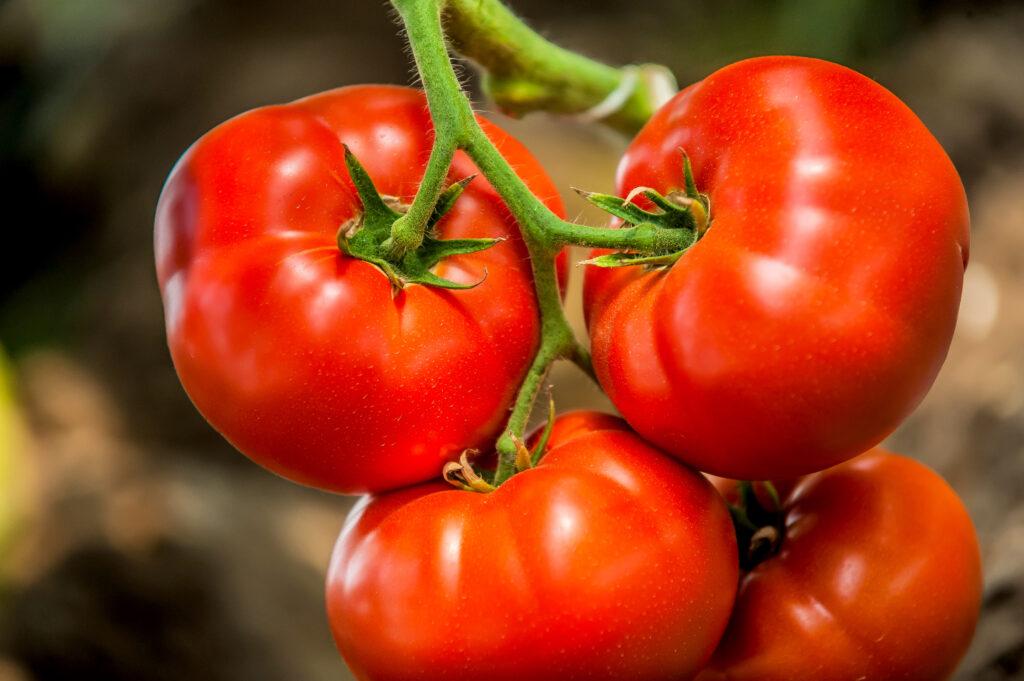
The Ministry of Food and Agriculture aims to eliminate tomato imports from Burkina Faso, which currently cost an estimated GH₵4 billion annually, by launching the Feed Ghana program. According to the Minister of Food and Agriculture, Eric Opoku, the government plans to achieve this goal through a comprehensive agricultural initiative that includes new irrigation projects, the establishment of a soya processing plant, and the implementation of a decentralized buffer stock system.
In an interview with Citi FM on Monday, April 14, 2025, Mr. Opoku discussed the government’s Agriculture for Economic Transformation Agenda, which was recently launched by President John Dramani Mahama. He highlighted that Ghana spends GH₵4 billion annually on importing tomatoes from Burkina Faso. “If Burkina Faso can produce tomatoes, why can’t we do the same here in Ghana, given our fertile soil and agricultural resources?” Mr. Opoku questioned.
He announced that a new vegetable production initiative, referred to as the “Eurybia” project, would target tomatoes, pepper, and onions. “We import onion from Niger, which is estimated around GH₵240 million annually. We also spend close to GH₵3 billion on the importation of pepper,” Mr Opoku said. He added that the government is working with a vegetable processing company to help absorb produce from local farmers.
According to the minister, eight regions have been selected for the first phase of an irrigation development plan under the “Irrigation for Wealth Creation” programme. This phase will cover 10,000 hectares of land. Mr Opoku also announced a partnership between the Ministry of Food and Agriculture and a private investor to establish a soya bean processing plant in the northern part of the country. The government will take a 40 percent stake in the facility.
To help address post-harvest losses and improve market access, Mr Opoku said the Ghana National Buffer Stock Company has been restructured and its operations decentralised to regional offices. “We have a team in place. The policy document was generated, and we have invited AGRA to be part of it to finalise everything for us.
The agriculture transformation plan also includes the establishment of 50 Farmer Service Centres across selected farming districts. The first of these will be sited in the Atebubu-Amantin District, which the ministry has identified as one of the country’s leading food-producing areas.
By: Mohammed Ali

