

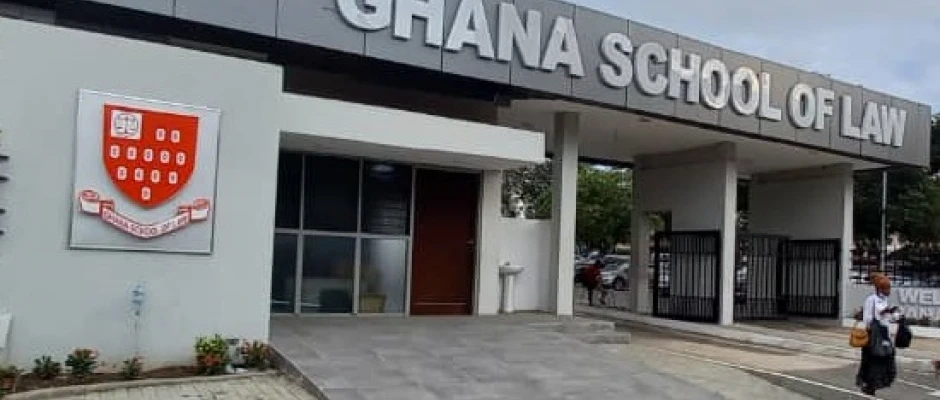
The Majority Chief Whip, Rockson-Nelson Dafeamekpor, has announced that the highly anticipated Legal Education Bill will dismantle the long-standing monopoly of the Ghana School of Law over professional legal training. Speaking on Joy News’ PM Express on Tuesday, May 27, the legislator, who is also a lawyer, described this move as a necessary reform aimed at “democratising legal education” and addressing a “corrupted” system. “We have been advocating for this change since around 2018,” said the Member of Parliament for South Dayi.
“Intake to the law school became acrimonious, contentious, and eventually corrupted. Corrupted because evidence emerged that even persons who didn’t write law school entrance exams got admitted.” Citing findings from the General Legal Council’s own disciplinary committee, Mr Dafeamekpor alleged that at least 11 students were smuggled into the law school.
“My information is that they were over 33,” he added. “But to minimise the impact, they said 11. What became the fate of those 11 students? We are yet to know, but we shall uncover.” According to him, the new bill will mandate that all accredited law faculties in the country be licensed not only to run academic LLB programmes, but also to train lawyers professionally. “Let every faculty accredited to run the academic LLB programs be accredited or licensed to train their own lawyers,” he said.
Under the proposed system, bar examinations—administered twice annually by the General Legal Council—will be the single national qualifying test. “We’ll have one in January and one in July. When you pass in January, you are called to the bar in March or April. If you pass in June, you’re called in September or October,” he explained. “That way, we can have as many lawyers as we want.”
He argued that many faculties are already calling themselves law schools, yet they are unable to train lawyers due to regulatory bottlenecks. “What happens to a law school when it can’t train lawyers?” he asked. “We want these faculties to be officially converted into law schools.” Under the new regulations, Makola, the traditional Ghana School of Law in Accra, will become just another competitor. “It will no longer have a monopoly. It will admit its own students, train them, and when they are ready, they will go and face the bar like everyone else.”
Mr Dafeamekpor stressed that not all those called to the bar need to be courtroom lawyers. “That’s the erroneous impression in the minds of a lot of people,” he said. “There are more people with a law degree who are not in practice. They are in corporate law and others, and we need them.”
He added that many district assemblies and institutions across Ghana are in need of legally trained minds, not necessarily practising lawyers, who can guide critical processes and decisions. “You need lawyers who may not even be practitioners, but who have the legal training, who have the legal mind to guide you.” Pressed by host Evans Mensah on when the bill will be passed, Mr Dafeamekpor responded with certainty and urgency.
“Why not? I’m the Majority Chief Whip, and we are even minded to move this under a certificate of urgency. It is one of our major political promises, and we will deliver it.” He also revealed that he would be publishing an article on the matter before the end of the week, which would further expose some of the issues that have plagued the current system of legal education. “We are serious about this. We are going to break the bottlenecks. We are going to expand access. The Legal Education Bill is the way forward,” he said.
By: Abubakar Ibrahim

