

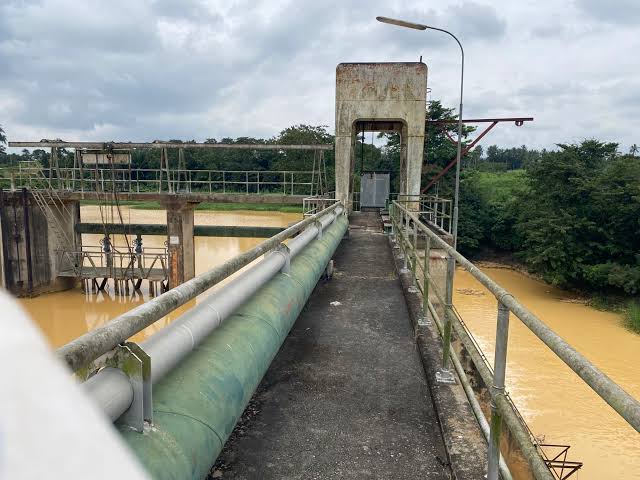
The Ghana Gold Board (GoldBod) has announced plans to finance the rehabilitation of six water treatment plants shut down due to poor water quality linked to irresponsible mining and related activities. Chief Executive Officer Sammy Gyamfi disclosed the initiative at the National Mining Dialogue in Accra on Tuesday, August 18, noting that GoldBod is currently funding work on three facilities operated by Ghana Water Limited — Daboase, Sekyere Hemang, and Bonsa — which supply more than 76 communities and about 100,000 residents in the Western and Central regions.
He added that GoldBod will also fully fund rehabilitation of the remaining three plants — Kwanyako, Baifikrom, and Essagyir — next year. The announcement comes amid mounting concern over the impact of illegal and irresponsible mining on Ghana’s water bodies. Mr Gyamfi said protecting water bodies, forests, farmlands and public health must be central to the country’s mining policy.
“The social licence of mining cannot coexist with poisoned rivers and devastated forest reserves,” he said. He said the intervention formed part of GoldBod’s wider environmental commitments, alongside its ongoing reclamation programme.
GoldBod has already commenced the reclamation of 50 hectares of degraded land in the Tano Nimri Forest Reserve and plans to extend the programme to another 100 hectares of degraded forest land next year.
Mr Gyamfi also disclosed that GoldBod was supporting the government’s fight against illegal mining through the National Anti-Illegal Mining Operations Secretariat (NAIMOS).
He said the institution had previously donated pick-up vehicles and GH¢5 million to NAIMOS and was now procuring high-specification speed boats to strengthen operations against illegal mining, particularly around water bodies.
According to him, these interventions are part of efforts to ensure that mining delivers economic benefits without leaving communities to bear the environmental and social costs.
He said Ghana’s mining sector must ultimately protect the resources and communities that depend on them while creating greater value from the country’s mineral wealth.
Source: Bernard Ralph Adams

