

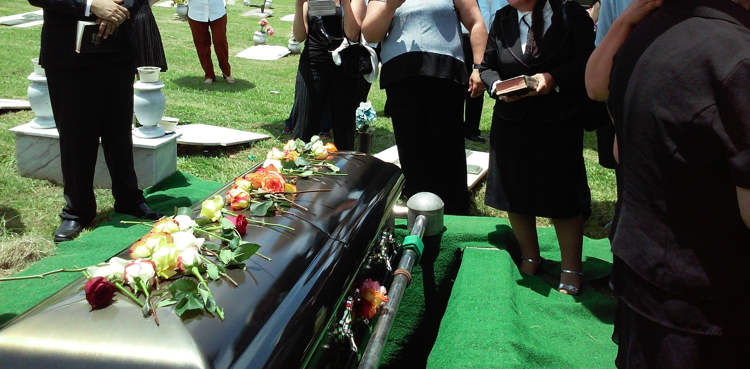
Few social occasions in Ghana draw as much attention, emotion, and spending as funerals. What once were modest rites have transformed into elaborate spectacles—bodies kept in morgues for extended periods, costly caskets, designer funeral cloths, multiple ceremonies, live bands, and lavish feasts. Today, funerals have become grand social events that often leave families financially burdened long after the ceremonies end.
Increasingly, they are seen not only as a mark of respect for the departed but also as a display of status for the living. In earlier times, however, funerals were simpler and far less extravagant. Serious meals were rarely served, except to relatives who had travelled, often on the Monday following the burial—a practice typical of Akan communities such as my hometown in Sefwi.
Civilisation and urbanisation have increasingly made funerals in Ghana too expensive. In some communities, leaders have attempted to limit the extravagance of these funerals, although it’s uncertain how effective these measures have been. Beyond the high financial costs, these elaborate ceremonies have led to an increase in social vices, as excessive celebrations often overshadow the mourning of the deceased. Many families even resort to selling properties or borrowing from financial institutions that collect donations at funeral grounds to cover the expenses incurred.
Too often, expectations surrounding funerals fall short, leaving families with losses both emotional and financial. This troubling trend calls for practical measures to ease the burden, if not eliminate it entirely. Research into funeral practices in Ghana reveals a steady shift from modest communal rites to costly social spectacles, shaped by modern lifestyles, migration, social pressures, and competition. While funerals consume significant portions of household income, they also undermine productivity, as many workers are compelled to travel frequently to attend funeral activities.
Social pressure and competition in the public space lead many families to do what is beyond their means because of the fear of criticism if a funeral appears relatively simple. In some communities, funerals have become occasions to display affluence, influence and social standing. Multiple ceremonies also account for this trend. Hitherto, one-week observances, pre-burial rites, wake-keepings and thanksgiving services, which now all add to the final cost, were modestly done and limited to a few people.
Now what seems to be the major driver of the high cost is food, drinks, chairs, canopies, sound systems and entertainment. These consume a chunk of all funeral budgets. Even people from relatively lower-income backgrounds spend so much on very expensive custom-designed funeral cloths and expensive attire for family members, and this, in many cases, has become almost mandatory, such that those who cannot afford have to seek financial assistance.
The financial burden of funerals can have long-term consequences. Some families remain in debt for years after a funeral. Ironically, people who did not and could not afford proper health care, for instance, for relatives while alive, sometimes spend heavily after death, including yours truly, argue that society must begin prioritising dignity over display.
Way forward?
As Ghanaians, we must return to simplicity rather than treating life as a competition. Traditional leaders, churches, and families should champion modest funerals that emphasise mourning and remembrance over spectacle. The one‑week observance, for instance, ought to be reserved for close family members to announce the date of the final rites. Consolidating funeral activities into a single main day would greatly reduce costs.
Families should also be encouraged to set firm spending limits and resist unnecessary expenses driven by public pressure. In addition, funeral savings and insurance schemes—already emerging in Ghana—can help households prepare without resorting to loans. Ultimately, a cultural reorientation is essential. A dignified funeral need not be extravagant; honouring the dead should never come at the expense of the living.
More children have to be in school.
Arguably, funerals remain an important part of Ghanaian culture and social identity.
They unite families, preserve traditions and provide emotional support during grief.
However, as costs continue to rise, there is a growing need for an honest national conversation about sustainability.
Honouring the dead should not impoverish the living.
Perhaps the time has come for Ghana to redefine what truly makes a befitting funeral.
The writer is Legal Manager/Company Secretary,
Graphic Comm. Group Ltd., Accra.
E-mail: sahstephen2002@gmail.com

