

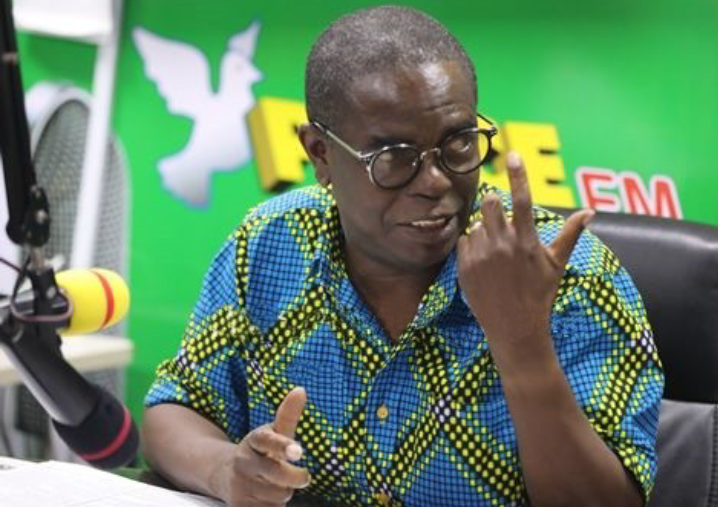
A potential reduction in fuel prices in Ghana is being welcomed by consumers, but it also raises concerns about its broader impact on government revenue and the economy. Kwesi Pratt Jnr, the former Managing Editor of the Insight Newspaper, discussed this topic on the “Good Morning Ghana” program on Metro TV on April 15. He noted that while the potential decrease provides relief for consumers, it also presents both positive and troubling implications for the country’s economy.
During the discussion with Moro Awudu, Mr. Pratt mentioned reports suggesting a possible cut of nearly five cedis per gallon, highlighting that this would be “very significant” if confirmed. “Usually, when prices go down, it is seen as a boost to the consumer,” he said. “It is supposed to make people happy.
“We must consider the bigger picture,” he stated. He referred to a report from the Herald newspaper, which he deemed credible, noting that the proposed reduction in fuel prices would be significant. “We are talking about nearly five cedis per gallon, which is a considerable amount,” he added. He explained that fuel pricing in Ghana is influenced by a complex structure, including assumed benchmark prices. “If you examine the price build-up, you’ll see that the foundation is based on an assumed price, often linked to the prices in Rotterdam,” he explained.
“Since this is an assumed price, there is room for adjustments and potential savings.” He also pointed out that taxes and levies make up nearly half of what consumers pay at the pump.
“Almost 50 percent of the ex pump price is made up of taxes,” he said. According to him, some of these charges play a key role in stabilising the energy sector. “The BOST levy, for example, allows the country to store fuel for emergencies. That is very important,” he said. “There is also the margin that ensures uniform fuel pricing across the country. Tampering with these could be risky.”
He warned that any reduction in fuel taxes could create a gap in government revenue. “Any reduction means less income,” he said. “And if revenue falls, it will affect other sectors of the economy.” He questioned how the government would make up for the shortfall if the policy goes ahead. “The budget was approved based on expected revenues,” he said. “If you cut fuel taxes, where will the money come from to fill the gap?” He said more clarity was needed before any firm assessment could be made. “We need to understand the impact before we can discuss it holistically,” he added.
Source: Edward Acquah

