

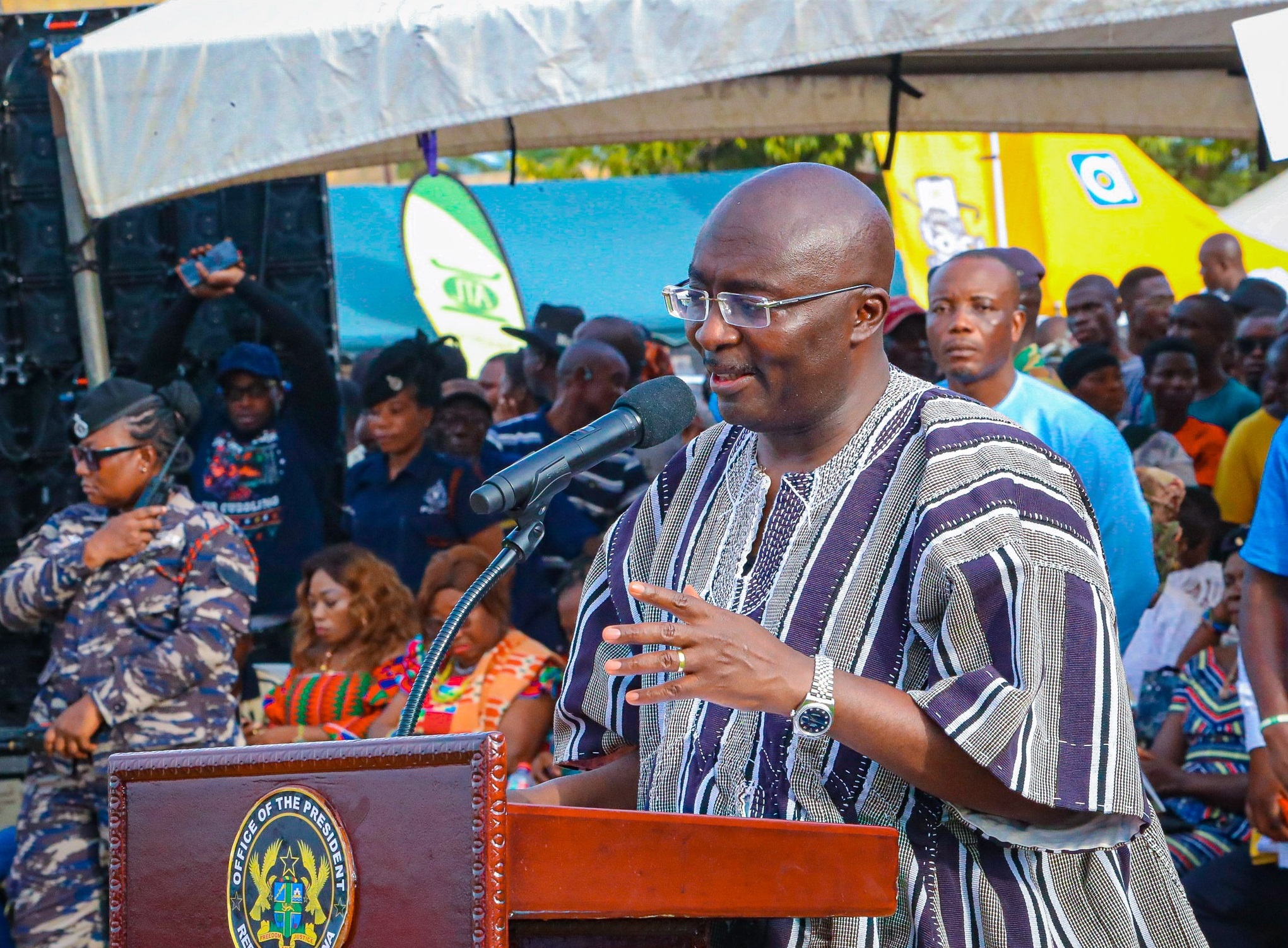
A statement by Vice President Dr. Mahamudu Bawumia regarding plans to designate every regional capital in Ghana as a duty-free zone, if he is elected President, has sparked debate. Critics argue that such an initiative already exists under current law. During his campaign, Dr. Bawumia claimed that this policy would reduce the cost of doing business and support entrepreneurs.
However, policy analyst and Founding President of the UP Tradition Institute, Dr. Razak Kojo Opoku, has questioned the originality of the proposal. He pointed out that Ghana already has several duty-free areas established under the Ghana Free Zones Act of 1995 (Act 504). This legislation created the Ghana Free Zones Authority (GFZA), which oversees the establishment of free zones and export processing areas throughout the country. Dr. Opoku stated, “Claims that Ghana has only one duty-free zone in Tema are misleading. Under Act 504, multiple free zones exist across the country.”
Among the listed duty-free and export processing zones are the Ashanti Technology Park, Sekondi Export Processing Zone, Shama Export Processing Zone, and the Tema Free Zone. In addition, other ongoing special economic zone projects include the Greater Kumasi Industrial City Project, Builsa Agro-Processing Park, West Park at Shama, and the Savelugu Industrial Park.
The Ghana Free Zones programme is structured around three categories:
Industrial Free Zones which facilitate the importation of raw materials for manufacturing products for export.
Commercial Free Zones, which allow for the handling and re-processing of imported goods for re-export.
Service Free Zones, which provide specialised services to free zone enterprises.
Dr. Opoku emphasised that while duty-free facilities can be beneficial, business leaders in Ghana are primarily focused on more significant economic issues such as exchange rate stability, inflation control, and interest rate management. He stated, “What is of utmost importance to businesspeople and the broader business community is the management of the exchange rate, inflation, and the policy rate, which influences loan interest rates at banks—not necessarily the establishment of duty-free zones in each region.
” Additionally, he advised Dr. Bawumia to create what he called a “semi-permeable team of elders and researchers” to evaluate and validate campaign promises before they are announced, to prevent “unnecessary backlash or criticism.”
Source: classfmonline.com/Cecil Mensah

