

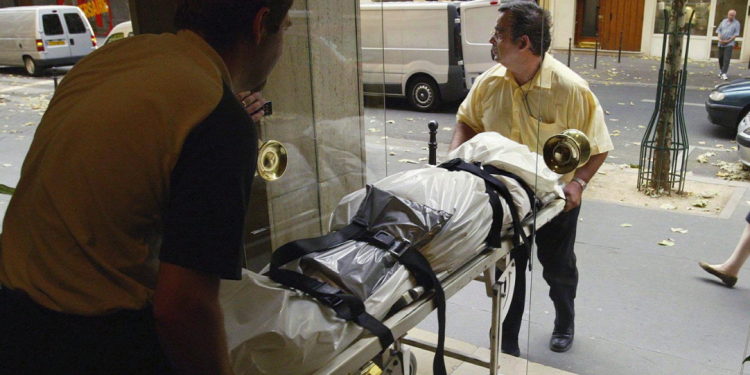
A severe heatwave sweeping across Europe has claimed at least 18 lives in France, including two young children left in a hot vehicle, as record‑breaking temperatures grip several countries across the continent.
The extreme conditions have disrupted daily life in France, forcing schools to close or adjust schedules while authorities struggle to manage the impact of soaring heat. Forecasters in Britain have also warned that temperatures this week could surpass long‑standing June records.
On Monday, several French cities recorded unprecedented highs. Bordeaux, in the country’s famed western wine region, reached 41.9°C, surpassing the record set last August, while Poitiers in central France registered 41.2°C, breaking a mark that had stood since 1947.
The heatwave has extended beyond France, with Spain also experiencing unusually high temperatures. In the northern coastal city of San Sebastian, temperatures were expected to reach 40°C more than double the city’s historic average for June 22, according to the Reuters Climate Monitor. The monitoring system indicated that Europe was the continent experiencing the greatest departure from historical temperature norms on Monday.
The alarming trend aligns with findings from an April report by the World Meteorological Organization, which concluded that Europe is warming at more than twice the global average rate. Among the most tragic incidents linked to the heatwave was the death of two children aged two and four in southeast France. First responders were unable to revive the children after they were found unconscious by their mother in the family car outside their home, according to a prosecutor in Carpentras.
The elderly have also been particularly vulnerable to the extreme conditions. Three people aged between 80 and 95 died over the weekend in the Bordeaux region due to heat-related health complications, local government official Sophie Brocas told France TV.
Authorities have additionally expressed concern over a rise in drowning incidents as residents seek relief from the scorching temperatures. French Civil Safety service spokesperson Jerome Boulanger urged caution, saying, “Swim only in places that are supervised,” after 13 people reportedly drowned between Sunday and Monday. Officials noted that drowning deaths surged by 172 percent during heatwaves last year as more people sought to cool off in water bodies.
Climate experts say the current weather pattern is being driven by an atmospheric phenomenon known as an Omega block. The heatwave affecting large parts of Europe is known as an Omega block because it takes the shape of the Greek letter, with a bulge of hot air in the middle and cooler air either side, said Clair Barnes, a research associate in extreme weather and climate at Imperial College London.
“It’s drawing warm air up from North Africa, from the Sahara, and that’s why we have this really intense heat. It’s very slow moving and it means there’s kind of no wind, no breeze for respite,” she said.
Barnes further explained that climate change is amplifying both heatwaves and storms, resulting in higher temperatures and heavier rainfall events.
In the United Kingdom, the Met Office warned that a four-day heatwave could push temperatures above 39°C in some areas, potentially breaking the current June record of 35.6°C set in 1957 and matched in 1976. The warning comes only weeks after the country recorded its hottest May temperature on record.
Residents have already begun feeling the effects. “Thirty-six degrees is going to be disgusting,” said data scientist Lewis Jennings while walking through central London.
France’s capital was also expected to experience exceptional temperatures, with Paris forecast to record 38.4°C potentially its highest June temperature ever, according to preliminary figures from Meteo-France.
Similar conditions were reported across Spain, where temperatures have remained significantly above seasonal averages. “We are seeing temperatures between 5 and 10° above normal for this time of year, and in some northern areas even more than 10° above average,” said Rubén del Campo, spokesperson for Spain’s AEMET weather agency.
In Italy, authorities issued red‑alert heat warnings for 12 cities on Monday as the country continued to battle the intensifying heatwave. The strain on infrastructure has become evident, with utility company Iren doubling staff shifts and deploying extra generators in Turin to counter sporadic power outages caused by surging demand on the electricity grid.
The heatwave’s impact is also being felt in the natural world. Wildlife rescue centres have reported a sharp rise in distressed animals, particularly bird species that nest beneath rooftops. Swifts, swallows, sparrows, and starlings have been especially vulnerable to the extreme temperatures, according to Romaine de Jaegere, founder of the Centre for the Rehabilitation of Animals Living in the Wild in Temploux, Belgium.
“Roof temperatures can reach 50 to 60°C, so the birds often jump rather than remain in their nests and literally cook,” De Jaegere explained, noting that the shelter had received 150 animals in just three days.
Source: Citi Newsroom

