

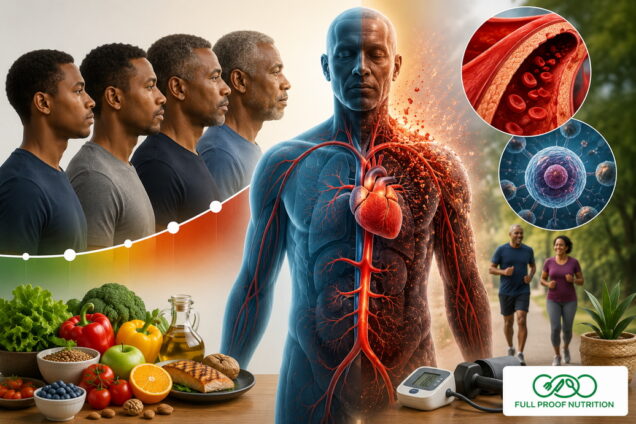
Health Guidance Before and After 50 – Insights from New Research
For decades, scientists believed ageing was a slow, continuous process. But emerging evidence paints a different picture. A recent study suggests ageing may not progress evenly across life. Instead, there appears to be a critical turning point around age 50, when many biological changes begin to accelerate. This shift could explain why people often encounter more health challenges in their 50s compared to their 30s or early 40s.
What the researchers did and what they found
Researchers examined tissue samples from individuals aged 14 to 68, applying advanced laboratory methods to track more than 12,000 proteins across multiple organs and tissues. Proteins, which carry out vital functions in the body, often reveal important clues about cellular health when their levels shift. The analysis showed that many age‑related biological changes became more pronounced in midlife—particularly around age 50. In other words, certain processes linked to ageing appear to accelerate during this stage of life.
Some parts of the body age faster
The study revealed that different organs age at varying rates. Some tissues experienced more pronounced age-related changes than others. Notably, the researchers identified significant protein changes related to aging in the aorta, which is the body’s main artery responsible for transporting blood from the heart to the rest of the body, as well as in other blood vessels. This finding is crucial, as the health of our blood vessels significantly influences the risk of conditions such as heart disease, stroke, and hypertension, which have become increasingly prevalent worldwide.
Implications for midlife and all ages
The study’s findings show that midlife may be a critical turning point for health. This makes prevention even more important.
- Healthy living should start early: If ageing accelerates around 50, then waiting until that age to start taking care of your health may be too late. Healthy habits should ideally begin much earlier. These include but not limited to, eating a balanced diet rich in fruits and vegetables, staying physically active, limiting excessive alcohol, avoiding smoking and managing stress. The earlier these habits begin, the greater their long-term benefits.
- Midlife health checks matter: In many communities, people only visit a health facility when they feel sick. But many chronic diseases develop silently over many years. Regular screening can help detect problems early and early detection can prevent complications later in life.
- Protecting heart health is essential: Because the study highlights ageing-related changes in blood vessels, protecting heart health should be a priority. Healthy eating, regular physical activity, maintaining a healthy weight and routine medical check-ups can all help protect the cardiovascular system and reduce the risk of chronic diseases later in life.
Ageing is a natural part of life, but science is helping us better understand how the body changes over time. Research suggests that midlife may represent an important period when many biological ageing processes become more pronounced. The encouraging news is that the way we live before and during this stage of life can strongly influence how healthy we remain later in life. In other words, healthy ageing does not start at 50- it begins much earlier.
Written by Dr. Laurene Boateng (PhD, RD)
Dr. Laurene Boateng is a Registered Dietitian and Senior Lecturer in the Department of Dietetics, University of Ghana. She is the founder and editor-in-chief of Full Proof Nutrition, a Nutrition Consultancy committed to providing reliable, evidence-based, and practical healthy eating advice through its website www.fullproofnutrition.com. Click here to join Full Proof Nutrition WhatsApp channel to receive more educative content. Send us a mail on fullproofnutrition@gmail.com. Grab a copy of my book on healthy eating – available now on Selar (Buy HEALTHY EATING MADE SIMPLE by Laurene Boateng on Selar) and Amazon (https://amzn.eu/d/6i9OeVb).
Reference
- Ding, Y., Zuo, Y., Zhang, B., Fan, Y., Xu, G., Cheng, Z., … & Liu, G. H. (2025). Comprehensive human proteome profiles across a 50-year lifespan reveal aging trajectories and signatures. Cell, 188(20), 5763-5784.
Source: Dr. Laurene Boateng (PhD, RD)

