


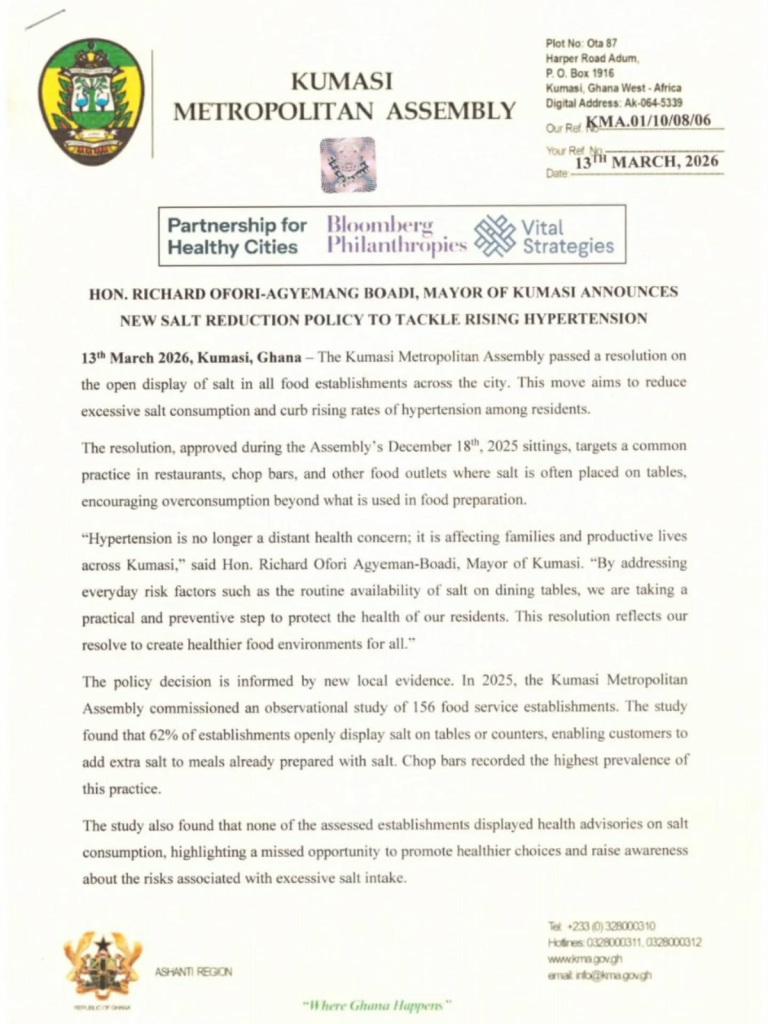
The Kumasi Metropolitan Assembly (KMA) has approved a resolution prohibiting the open display of salt in restaurants, chop bars, and other food establishments across the city, as part of efforts to curb excessive salt intake and address rising cases of hypertension. The policy, announced in a statement on Friday, March 13, 2026, by Kumasi Mayor Richard Ofori-Agyeman Boadi, is aimed at fostering healthier food environments and safeguarding public health.
Passed during the Assembly’s sitting on December 18, 2025, the measure targets the widespread practice of placing salt on dining tables or counters, which enables customers to add extra salt to meals already seasoned during preparation. “Limiting routine access to salt at dining tables is a practical step toward reducing excessive salt intake and preventing related health complications,” the Mayor said.
The decision stems from a local observational study commissioned by the Assembly in 2025, which assessed 156 food service establishments across Kumasi. Findings revealed that 62% of outlets openly displayed salt, with chop bars recording the highest prevalence. The study also noted that none of the establishments provided health advisories on salt consumption—a gap authorities described as a missed opportunity to encourage healthier eating habits.
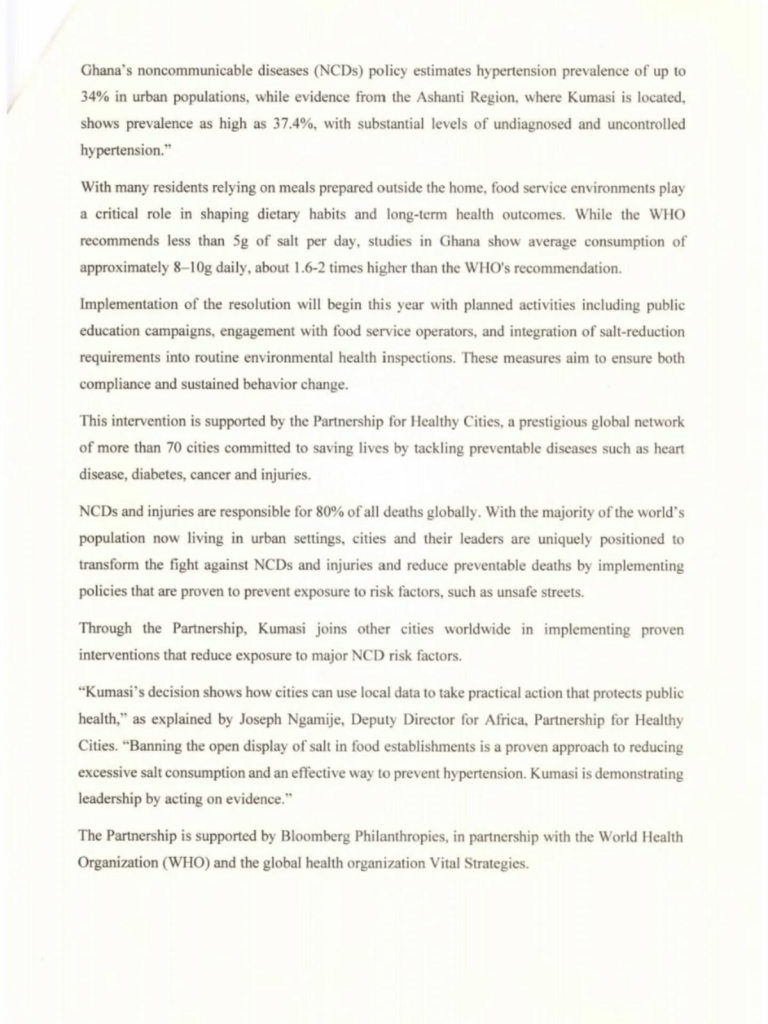
Health data cited by the Assembly indicate that hypertension prevalence in urban Ghanaian populations is around 34%, while in the Ashanti Region it is estimated at 37.4%, with many cases remaining undiagnosed or uncontrolled. The World Health Organisation recommends less than five grams of salt per day, yet studies in Ghana show average daily intake ranges between eight and ten grams.
The policy is set to take effect this year and will feature public education campaigns, collaboration with food service operators, and the incorporation of salt-reduction requirements into routine environmental health inspections. The initiative is supported by the Partnership for Healthy Cities—a global network of more than 70 cities committed to reducing preventable diseases—with backing from Bloomberg Philanthropies, the World Health Organisation, and Vital Strategies. Officials emphasise that the intervention is expected to lower exposure to major risk factors linked to noncommunicable diseases and enhance public health outcomes in Kumasi.
Source: Leticia Osei

