


Students at the University of Ghana have raised concerns after academic fees for the 2025/2026 academic year were significantly increased, with all colleges seeing hikes of over 25 percent. While university officials have not yet provided an official explanation for the substantial rise, the provisional fee schedule for 2025/26 reveals considerable increases for both new and returning students.
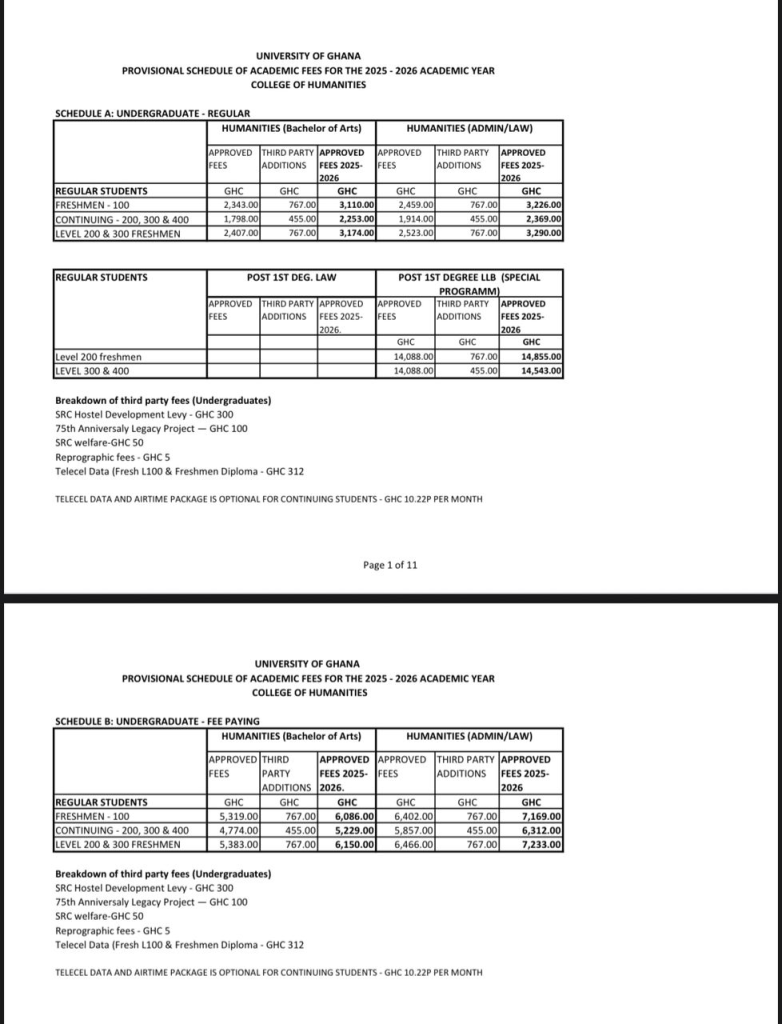
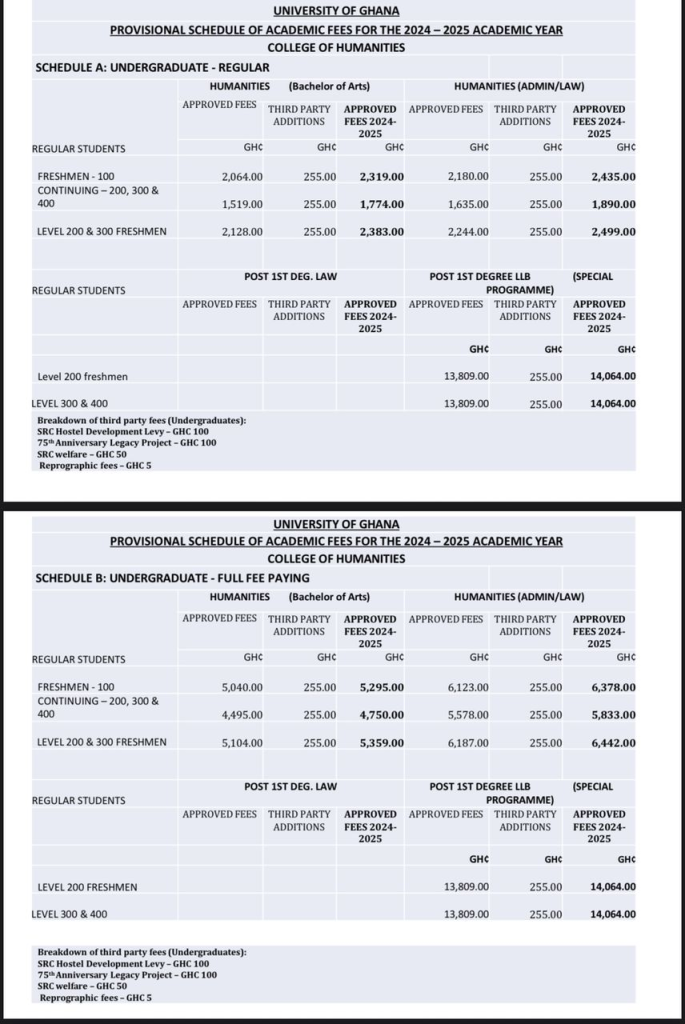
For example, at the College of Humanities, Level 100 students will now pay GH¢3,110—a 34 percent jump from the GH¢2,319 charged in 2024/25. Continuing students at the college will face fees of GH¢2,253, which is 27 percent higher than the previous amount of GH¢1,777.
Similarly, at the University of Ghana School of Law, undergraduate freshers under the College of Humanities will pay GH¢3,226, a 33 percent increase from GH¢2,435 last academic year. Continuing law students will also see their fees rise from GH¢1,890 to GH¢2,396.
Other colleges, including Health Sciences, Basic and Applied Sciences, and Education, have also recorded fee hikes ranging between 25 and 35 percent. The increases have generated agitation among students and parents, many of whom say the changes were introduced without prior notice.
The revised fee structure reveals a significant increase in third-party charges, which are now a major factor behind the overall fee hike. For the 2024/25 academic year, third-party fees were GH¢255, but for 2025/26, they have jumped to GH¢767 for new students and GH¢455 for returning students. These fees include an SRC Hostel Development Levy of GH¢300, a GH¢100 contribution to the university’s 75th Anniversary Legacy Project, SRC welfare dues of GH¢50, and reprographic fees of GH¢5.
Additionally, incoming Level 100 and diploma students must pay GH¢312 for a Telecel data package, while continuing students can opt into a Telecel data and airtime package costing GH¢10.22 per month. Students are urging university officials to provide a clearer explanation for these sudden fee increases, expressing concerns that the higher costs could impose added financial burdens on them and their families.
Source: Afua Adwubi Wiafe Akenteng

