

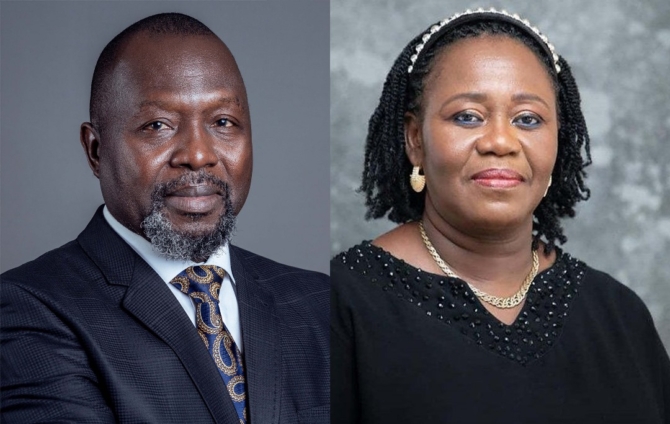
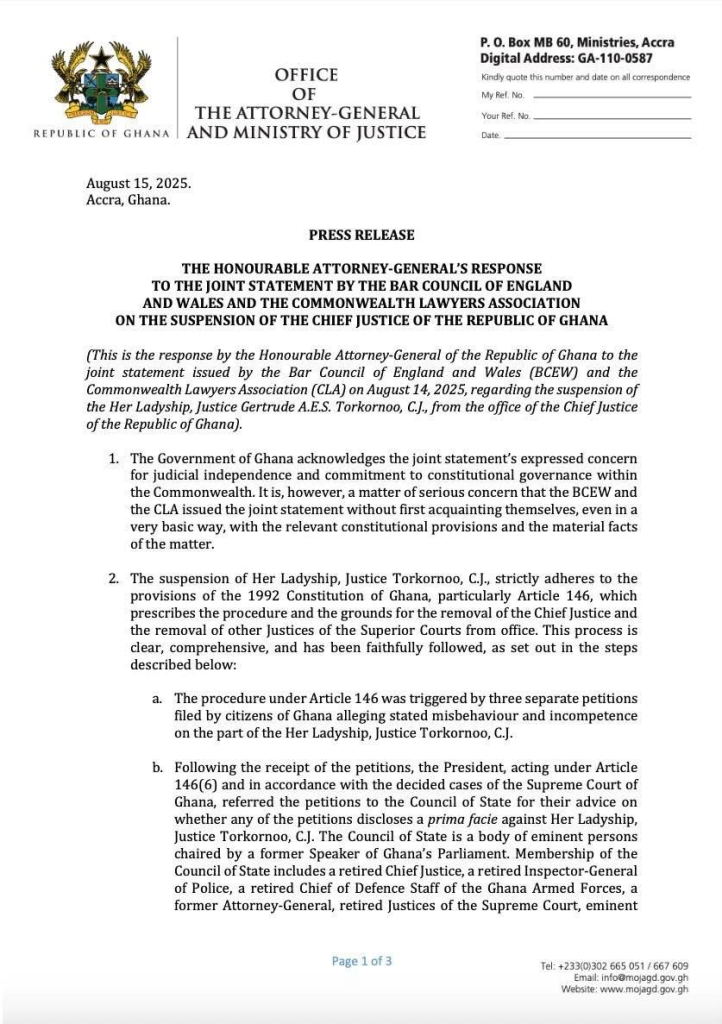
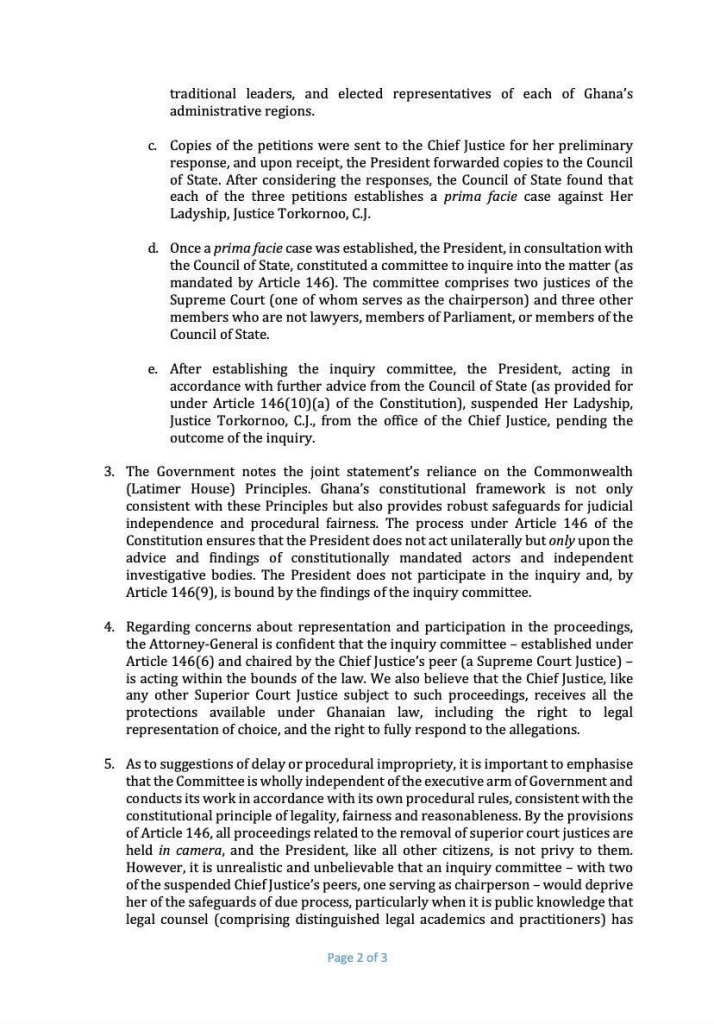
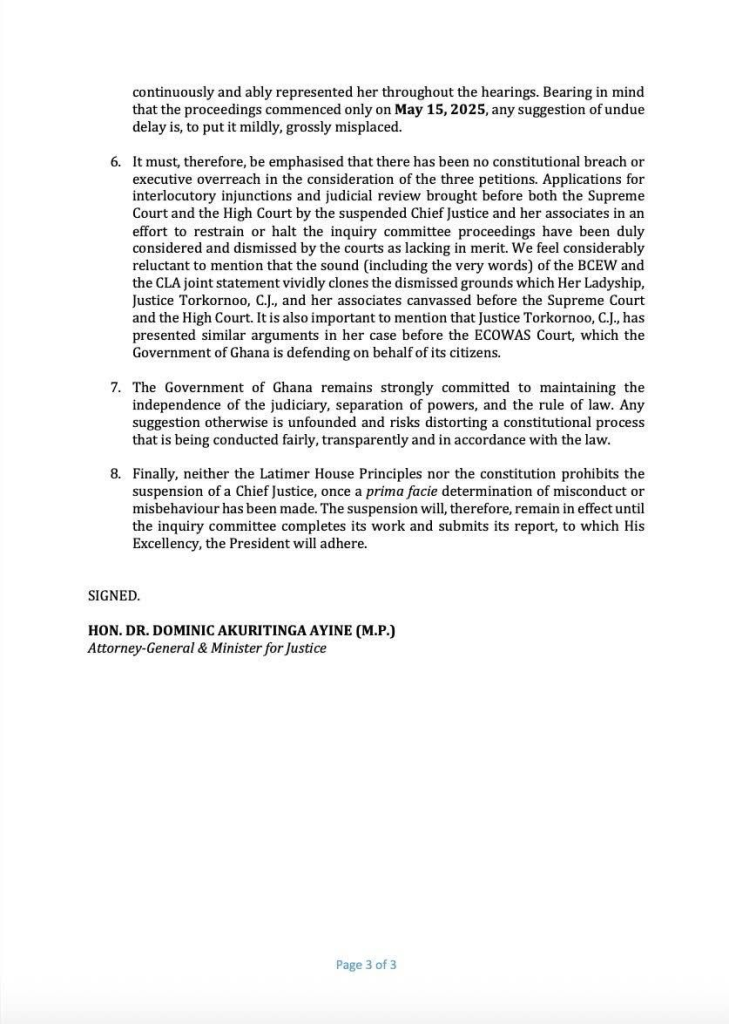
Attorney General Dr. Dominic Ayine has clarified that the suspension of Chief Justice Gertrude Torkornoo will remain in effect until the inquiry committee completes its work and submits a report to President John Dramani Mahama. Dr. Ayine emphasised that the suspension strictly follows the provisions of the 1992 Constitution, rejecting claims of constitutional violations or executive interference in the handling of the three petitions against the Chief Justice.
His remarks came in response to a joint statement issued on August 14 by the Bar Council of England and Wales and the Commonwealth Lawyers Association, which urged President Mahama to reinstate Justice Torkornoo immediately. The statement highlighted Ghana’s strong tradition of upholding the rule of law and expressed concern over the Chief Justice’s suspension on April 22, 2025.
In response, Dr. Ayine stated that neither the Constitution nor the Latimer House Principles prevents the suspension of a Chief Justice if a prima facie case of misconduct or misbehaviour has been established. He reaffirmed the government’s commitment to judicial independence, the separation of powers, and the rule of law, cautioning that any contrary suggestions are unfounded and could misrepresent a constitutional process that is being conducted fairly, transparently, and in accordance with the law.
“The suspension will, therefore, remain in effect until the inquiry committee completes its work and submits its report, which His Excellency, the President, will adhere to,” he said.
Background
On April 22, 2025, President John Dramani Mahama suspended Chief Justice Gertrude Torkornoo from office following the establishment of a prima facie case based on three undisclosed petitions alleging misconduct and incompetence.
Under Article 146(6) of Ghana’s 1992 Constitution, the president, after consulting the Council of State, may suspend a Supreme Court justice if a prima facie case is established and appoint a committee to investigate. President Mahama did exactly that—forming a five-member inquiry panel chaired by Justice Gabriel Scott Pwamang, with other members including Justice Samuel Adibu-Asiedu, former Auditor-General Daniel Yaw Domelevo, Major Flora Bazaanura Dalugo, and Professor James Sefah-Dzisah.
Justice Paul Baffoe-Bonnie, the most senior Supreme Court judge, was appointed acting Chief Justice during the investigation process.
The suspension sent shockwaves through Ghana’s legal community. The Ghana Bar Association (GBA) condemned the action as unconstitutional, arguing that the president did not publish any Constitutional Instrument or regulations to justify the exercise of discretionary power, as required under Article 296 of the Constitution.
Similarly, the Centre for Democratic Movement (CDM) denounced the decision as a breach of constitutional norms and judicial independence. CDM challenged the impartiality of the inquiry, citing the committee’s composition as politically skewed and lacking transparency, thereby undermining due process.
Chief Justice Torkornoo has publicly defended herself, characterising the suspension and removal proceedings as “arbitrary,” “cruel,” and unconstitutional. She has refused to resign, emphasising that doing so would amount to submitting to a flawed process and forfeiting her right to defend herself.
The NPP (New Patriotic Party) echoed these concerns, condemning the suspension as unconstitutional and warning that it jeopardised Ghana’s democratic integrity.
By: Leticia Osei

