

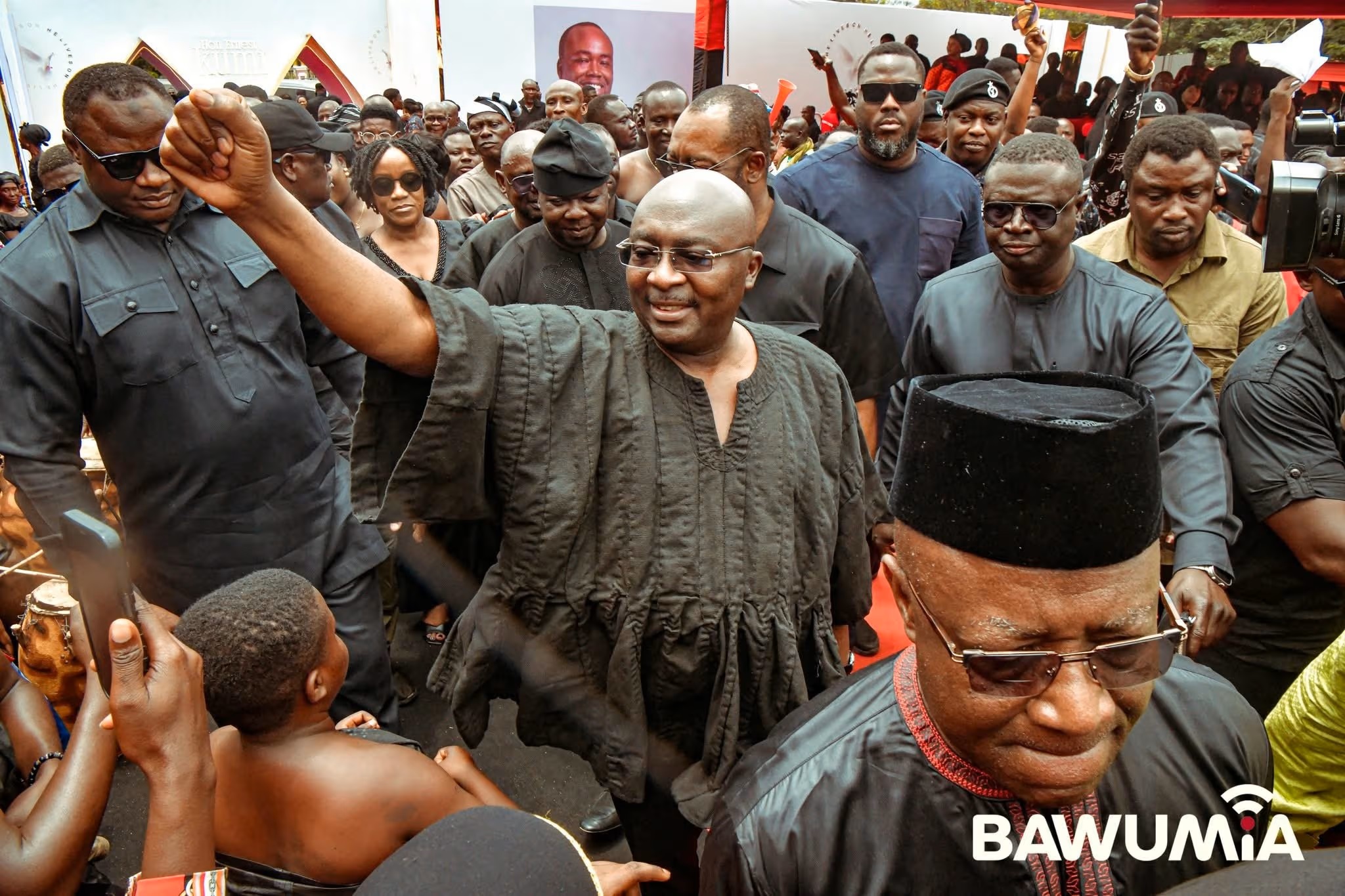
Dr. Mahamudu Bawumia, a frontrunner in the New Patriotic Party’s (NPP) presidential primaries, has attributed the party’s recent electoral setback to what he termed the “one-man-chop syndrome.” He pledged to pursue a more inclusive leadership style if chosen as flagbearer.
Speaking to delegates and supporters in the Asawase Constituency during his campaign tour of the Ashanti Region, Dr. Bawumia cited findings from internal NPP committee reports, which revealed that concentrating benefits and opportunities in the hands of a few undermined party unity and contributed to the defeat. He assured delegates that such practices would not continue under his leadership, emphasising the importance of fairness, equity, and wider participation within the party.
Dr Bawumia said the decision delegates will make at the NPP’s presidential primaries on January 31, 2026, would shape not only the party’s future but also Ghana’s governance direction, urging them to back a candidate with experience and a record of delivery.
He argued that the NPP could only return to power by presenting a candidate with demonstrable results in key sectors of the economy and governance, adding that leadership experience would be critical in rebuilding public trust.
Presenting his proposals for party reorganisation, Dr. Mahamudu Bawumia unveiled plans to establish a Database Welfare System aimed at consolidating member information and enhancing the delivery of welfare support. He further pledged that, if elected, 3,000 of the 7,000 governance appointments would be distributed across constituencies to foster equity, inclusiveness, and stronger grassroots involvement.
Additionally, he proposed a Constituency-Based Budget System to ensure that local challenges are properly documented and addressed in a timely manner. Dr. Bawumia was joined on the campaign tour by several senior party figures, including former Majority Leader Osei Kyei-Mensah, Dr. Matthew Opoku Prempeh, Kofi Jumah, Collins Ntim, Simon Osei Mensah, Ben Abdullah Banda, Saalim Bamba, Dr. Ayew Afriyie, Kennedy Kankam, and Alhaji Mohammed Moro.
Source: Leticia Osei

