

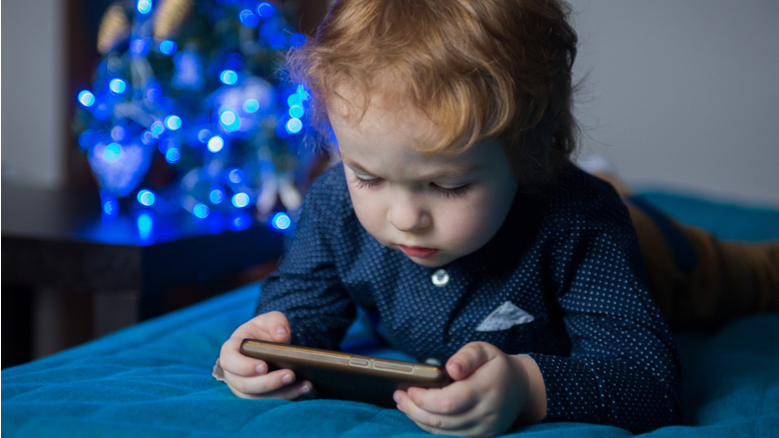
Parents should limit their children’s use of smartphones and social media, according to new research. A study released on Monday found that smartphone use before the age of 13 could harm children’s mental health. It revealed that children under 13 who use smartphones are associated with suicidal thoughts, poor emotional regulation, lower self-worth, and detachment from reality, particularly among girls. This study was published in the Journal of Human Development and Capabilities.
The findings indicate that for each year a child acquires a smartphone before turning 13, their mental health and well-being are likely to decrease. This trend is attributed to increased access to social media, sleep disruptions, experiences of cyberbullying, and negative family relationships among those children.
The data was gathered from nearly 2 million self-reported surveys across 163 countries. The results were so alarming that researchers are calling for global restrictions to prevent children under 13 from using smartphones and social media. “This calls for urgent action to limit access for children under 13 to smartphones, along with more nuanced regulations regarding the digital environment young people encounter,” stated Tara Thiagarajan, the lead study author and founder of Sapien Labs, the nonprofit organization that conducted the survey.
While previous research focused on how smartphone use is related to anxiety and depression, this survey looked at symptoms not commonly studied, including emotional regulation and self-worth, and found they are very significant, said Thiagarajan, who is based in Arlington, Virginia.
The results were self-reported, which means they weren’t independently verified by researchers. In addition, the study can’t pinpoint what types of smartphone use drove the results and can’t account for how they might change as technologies evolve, Thiagarajan said.
Hold off on social media until 16
This research has convinced me that giving kids smartphones before age 13 is a terrible idea. When I speak with parents in schools, parent groups, and other community spaces, I recommend not allowing kids to use social media until they are 16. Solid research from the United Kingdom shows that using social media during puberty is associated with lower life satisfaction one year later. Social psychologist Jonathan Haidt also suggests waiting until age 16 for children to use social media in his best-selling book, “The Anxious Generation: How the Great Rewiring of Childhood Is Causing an Epidemic of Mental Illness.”
Although it may seem nearly impossible to hold off this long, we can make it happen if we talk to the parents of our children’s friends and collectively agree not to allow our kids to use social apps until this age. In all my talks across the country as an expert on the effects of social media on women and girls, I have yet to meet a parent or guardian who is excited for their child to use social media. Instead, they worry that their kids will miss out on social opportunities if they are not on these platforms. This is why involving the parents of their friends is crucial.
The group Wait Until 8th has created a pledge that parents can sign collectively, committing to not let their children use smartphones until the end of eighth grade. Other organizations have developed similar pledges. “Check to see if there is one in your community, and if not, and it feels important to you, consider starting one,” said Melissa Greenberg, a clinical psychologist at the Princeton Psychotherapy Center in New Jersey, who was not involved in the study. “Even if people aren’t already talking about it, they may feel relieved if you start the conversation.”
Additionally, parents could look for schools with stronger policies regarding smartphone use on campus or advocate for better smartphone policies at their children’s schools, according to Thiagarajan. However, researchers warn that parents cannot solve these issues alone without societal support. For instance, even if I prevent my daughters from using social media until they are 16 and convince their friends’ parents to do the same, it won’t stop them from being exposed to these apps by other kids on the school bus or at after-school events. This is why parents “should also take a more active role in discussions about regulation,” Thiagarajan said.
Check in with your kids
If you have already let your child use a smartphone before age 13 or are just worried about the results, “don’t panic,” Greenberg said. “If you are concerned but don’t notice any of these symptoms in your child, you can still talk to them to let them know that some people struggle with anxiety, low self-worth and intense emotions,” she said.
“You can let them know that there is help available should they ever need it, and you can invite them to come to you if they are ever struggling or need support.” If you do notice these symptoms in your child, find a licensed professional who can help, she said.
It’s OK to make changes
What happens if your child already has a smartphone? “You may feel stuck when you read things like this because you feel like you can’t go back,” Greenberg said. That’s not true. “Don’t be afraid to change course if you feel like what you’ve already done isn’t working for your child or for your family,” she said.
Parents can think about options such as using parental controls, switching to a flip phone, or deleting apps or features, Greenberg said. Of course, kids may not react pleasantly to such a change, but don’t let that stop you from acting if you think it would benefit them, she said.
Parents can use this script, Greenberg suggested: “When we first gave you your smartphone, there were things we didn’t know about how it might impact you. There are a lot of scientists and doctors who are doing research on the effects smartphones are having on kids, and we’re learning a lot more than we knew before. We have to make some changes because we want to make sure that we’re doing the healthiest thing for you.”
If kids get upset, be sympathetic to their concerns, she said. “Adults don’t always respond in the most mature way when you take something away or ask them to change a habit, and we can’t expect that our kids will either,” Greenberg said.
She suggested parents talk about your own struggles to get your smartphone use right as a way of (literally) connecting and acknowledging that it’s difficult for all of us to resist their pull.
What can you do now that you know it could be quite dangerous to allow young kids to use smartphones? If your child doesn’t yet have one, start talking to other parents in your community to collectively agree not to let your kids get them until they’re older.
Keeping our kids away from smartphones could be one of the smartest decisions parents make.
Source: Analysis by Kara Alaimo/CNN

