

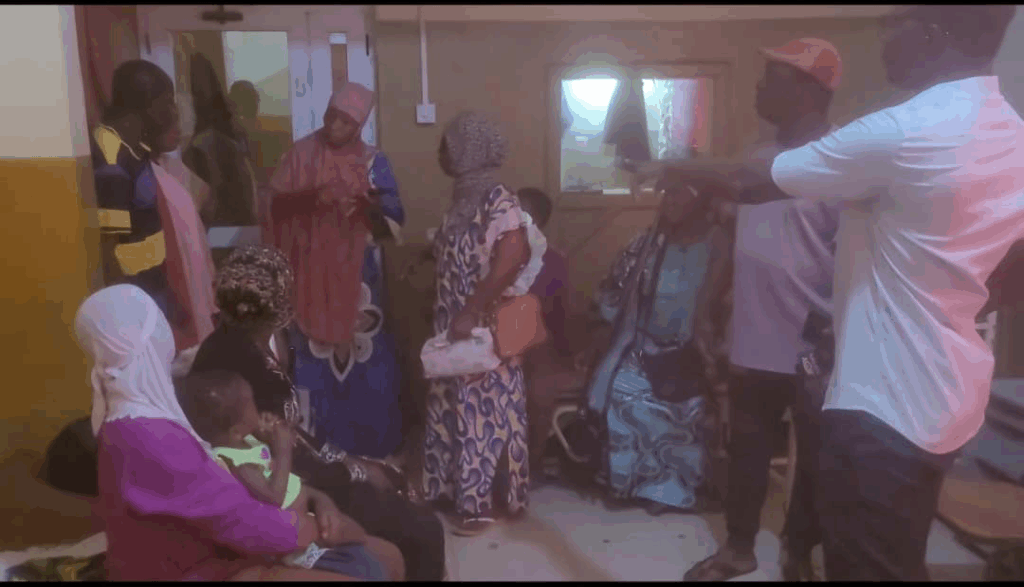
The Domestic Violence and Victim Support Unit (DOVVSU) of the Northern Regional Police Command has detained three individuals in connection with the abduction of a newborn from One Heart Hospital in Tamale. The arrests, carried out on Sunday, December 21, involve two nurses—Abubakari Fatima Bintu and Grace Asiedu Mensah—who were on duty during the incident, along with a security guard, Abukari Iddi.
According to reports, the baby was taken after a woman, allegedly impersonating a nurse, entered the labour ward and informed staff she was taking the infant for an injection. She then left the ward with the child and failed to return. The Northern Regional Police Public Relations Officer, Inspector Alhassan Luckman Niendow, said intelligence-led operations are ongoing to locate the missing baby and arrest other suspects linked to the case. He said police are treating the matter with urgency.
Earlier, the baby’s mother, Abdul Mumin Safiyatu, recounted to JoyNews that she had briefly stepped out to use the washroom. On returning, she discovered her newborn missing, sparking panic across the facility. An eyewitness told JoyNews that a woman entered the delivery room, stated she was taking the infant for routine checks, and subsequently vanished with the child. The baby’s father, Bawa Sayibu, added that he received a call at about 1:15 a.m. informing him that his wife had given birth to a baby boy.
He said he later bought medicines needed for the baby before discharge and left the hospital around 10 a.m.
“I was sitting with my colleagues when my sister called me crying and asked me to rush to the hospital,” he said.
“When I arrived, I was told the baby had been stolen.”
Mr Sayibu added that police made arrests after the family reported the incident, including one of his wives who works at the hospital. Following the incident, residents of Lamashegu besieged the hospital, demanding accountability. Some residents expressed shock and raised concerns about security arrangements at health facilities, calling for stronger measures to protect patients and their families.
Source: Martina Bugri

