

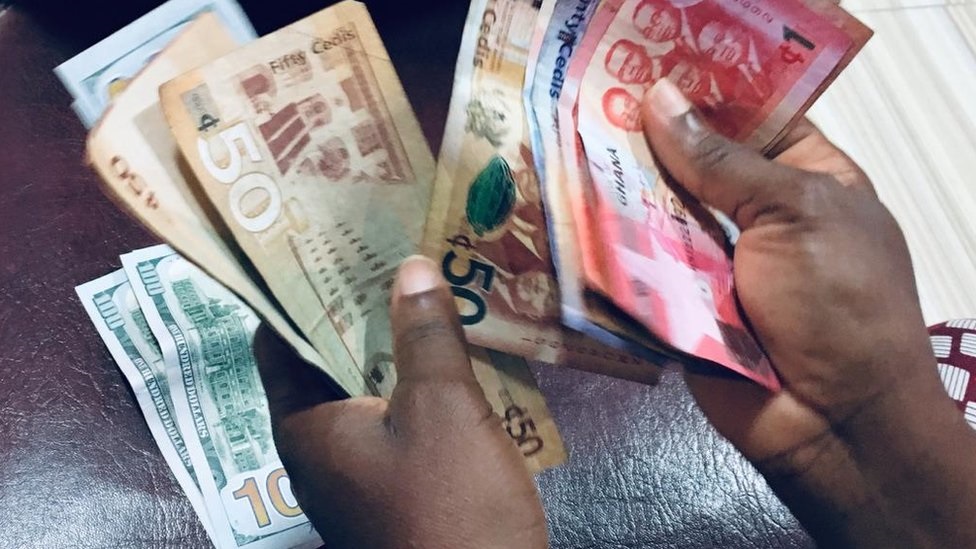
By mid-May 2026, the Ghana cedi had depreciated by 8.4 percent against the US dollar since the start of the year, even as macroeconomic stability improved and inflation dropped to its lowest levels in years, according to the Bank of Ghana’s latest Summary of Economic and Financial Data released on May 19, 2026. In the first week of May, the cedi traded at GH¢11.4125 to the US dollar, down from GH¢10.95 at the end of January.
Year-to-date, the cedi also fell by 7.5 percent against both the British pound and the euro, trading at GH¢15.2055 to the pound and GH¢13.2695 to the euro. The Real Effective Exchange Rate—a measure of the cedi’s value against a basket of trading partner currencies adjusted for inflation—stood at 93.5 in April 2026, indicating that the currency remains broadly competitive despite its nominal depreciation.
Inflation hits 3.4 per cent in April
Consumer inflation continued its downward trajectory, falling to 3.4 per cent year-on-year in April 2026, up marginally from 3.2 per cent in March but still within striking distance of the central bank’s single-digit target band. Food inflation stood at 2.2 per cent, while non-food inflation rose slightly to 4.2 per cent.
The disinflationary trend has been driven by base effects from the previous year, stable exchange rates, and tight monetary policy. The Monetary Policy Rate was reduced to 14.0 per cent in April 2026, down from 15.5 per cent in January and sharply lower than the 28.0 per cent rate recorded in April 2025.
Monthly inflation remained subdued, with April recording a 0.9 per cent increase in consumer prices, driven by a 0.8 per cent rise in food prices and a 1.1 per cent increase in non-food prices.
Gold and oil prices diverge
International commodity prices showed varied trends. Gold prices jumped 9.4% year-to-date, reaching US$4,724.10 per fine ounce in April 2026, which significantly boosted Ghana’s export earnings. The average realised gold price was US$4,466.20 per ounce, marking a 6.7% increase for the year. Brent crude oil prices also saw a sharp rise, surging 67.4% year-to-date to US$103.20 per barrel in April.
This spike raised concerns about possible imported inflation and increased pressure on the cedi due to higher fuel import costs. The realised crude oil price was US$110.70 per barrel. In contrast, cocoa prices continued their extended decline, dropping 43.2% year-to-date to US$3,350.10 per tonne, as global supply rebounded after two years of production shortages.
Interest rates fall across the curve
The Bank of Ghana’s policy rate reductions have fed through to the broader economy, with the average lending rate falling to 16.33 per cent in April 2026, down from 27.40 per cent a year earlier. The 91-day Treasury bill interest rate fell to 4.90 per cent, while the 182-day and 364-day bills traded at 6.84 per cent and 10.02 per cent respectively. The interbank weighted average rate declined to 10.36 per cent in April, reflecting improved liquidity conditions in the banking system.
External reserves remain adequate
Gross international reserves stood at US$13.95 billion in April 2026, sufficient to cover 5.5 months of import cover, well above the conventional adequacy benchmark of three months. Net international reserves were recorded at US$10.99 billion.
The country’s total public debt stood at GH¢674.1 billion as of March 2026, equivalent to 42.2 per cent of GDP. External debt accounted for GH¢313.6 billion (19.6 per cent of GDP), while domestic debt stood at GH¢360.4 billion (22.6 per cent of GDP).
Stock market rallies on favourable conditions
The Ghana Stock Exchange Composite Index surged 72.5 per cent year-to-date to 15,130.5 points in April 2026, reflecting renewed investor confidence in the economy. Market capitalisation rose to GH¢281.8 billion, up 63.8 per cent since the beginning of the year. The GSE Financial Stock Index performed even more strongly, gaining 90.2 per cent year-to-date to 8,839.4 points, as banking sector stocks continued their remarkable recovery following the Domestic Debt Exchange Programme.
Mobile money transactions surge
Mobile money transaction values reached GH¢493.2 billion in April 2026, with 967 million transactions processed during the month. Registered mobile money accounts grew to 83 million, with 26 million active accounts. The value of mobile money interoperability transactions stood at GH¢5.8 billion for the month.
Outlook
The sharp depreciation of the cedi, combined with the dramatic rally in crude oil prices and persistent weakness in cocoa revenues, presents ongoing risks to the external accounts. However, the continued decline in inflation and the reduction in interest rates provide a favourable backdrop for private sector credit growth and economic expansion.
The Bank of Ghana’s next monetary policy committee meeting will be closely watched for signals on the future direction of interest rates and any potential interventions to stabilise the local currency.
Source: GraphicOnline

