
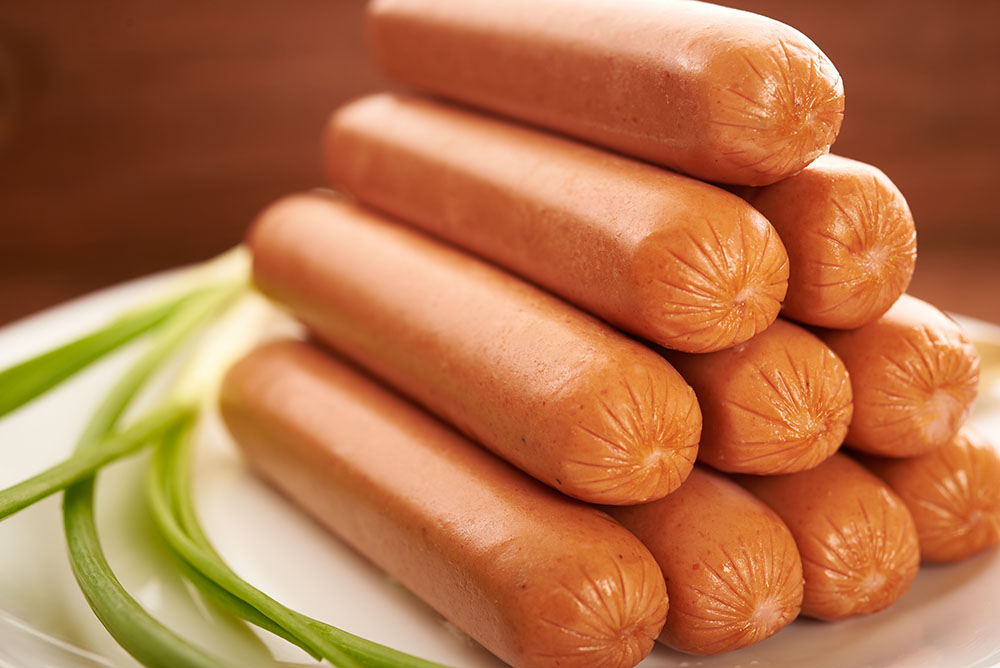
You’ll find them everywhere: in lunchboxes at school, at children’s parties, and in chop bars from Accra to Kumasi. Chicken franks and sausages have become a go-to option for busy parents and picky eaters alike. Kids enjoy them. Adults enjoy them. They’re quick, affordable, and, as people say, “everyone eats it.” But here’s what rarely gets discussed at the table: the impact these foods may have on your child’s health.
What’s actually in that sausage?
Chicken franks are highly processed meat. To keep them cheap, shelf-stable, and bright pink, manufacturers load them with:
- Nitrates and nitrites – Preservatives that keep the meat from spoiling. The World Health Organization classifies processed meat with these additives as a Group 1 carcinogen. That’s the same category as tobacco. Regular intake is linked to higher rates of colorectal cancer and heart disease.
- Excess salt, sugar, and fat – One sausage can have up to 30% of a child’s daily sodium limit. Too much sodium early on sets kids up for hypertension later.
- Artificial dyes and flavour enhancers – Colours like Red 40, Yellow 5, and Yellow 6 are added to make them look appealing. Studies have linked these dyes to hyperactivity, allergies, and attention issues in children.
- Bacteria risk – Even though they’re sold “pre-cooked,” poor packaging and handling can lead to contamination with Salmonella and Listeria. Kids’ immune systems are still developing, so foodborne illness hits them harder.
It’s not just about cancer
According to Consultant Dietitian, Wise Chukwudi Letsa,
Sausages pack calories but offer little nutrition—a direct pathway to childhood obesity. And obesity in childhood is one of the strongest indicators of obesity later in life. Once a child becomes obese, the likelihood of developing Type 2 diabetes, hypertension, and other non-communicable diseases rises sharply. Alarmingly, these conditions are appearing in Ghana at younger ages than ever before
So what do you do?
I’m not saying you need to ban everything and never let your child taste a sausage again. But you do control what comes into your home.
- Stop treating sausages like everyday food. If you serve them, make it occasional—not weekly. Think of them as a treat, not a protein source.
- Better yet, make your own. Blend lean chicken, beef, or fish at home with natural spices and herbs. In just 20 minutes, you control what goes in—no dyes, no excess salt, no hidden additives.
- Choose whole proteins instead. Grilled or boiled lean meat, fish, eggs, beans, and groundnuts provide children with the protein they need without the chemical burden. Fry less; steam, grill, or boil more.
- And train early. Proverbs 22:6 reminds us: ‘Train up a child in the way he should go.’ Children don’t naturally ask for sausages—we introduce them. We can also introduce them to healthier options.
The hard truth
No child expects you to compromise their future for the sake of convenience. As parents, the decision is in our hands. Picking up a pack of hot dogs on the way home is easy; preparing real meals takes more effort. But while one choice supports health, the other increases risk. You don’t have to be perfect—you just have to be purposeful.
Start this week: Replace one sausage meal with grilled fish or lean meat. See how your kids respond. You might be surprised.
Your child’s future health is being decided in your kitchen today. Choose like it matters, because it does.
Source: Esinam Osei