
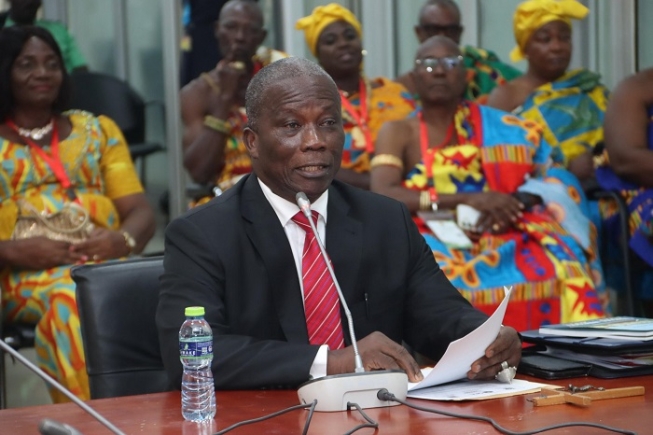
Supreme Court nominee Justice Philip Bright Mensah has advised against making any changes to Ghana’s current laws concerning the legal age of consent for sexual activity. The Children’s Act of 1998 establishes the legal age for marriage at 18, while the Criminal Offences Act of 1960 allows individuals aged 16 and older to legally consent to sexual activity. This discrepancy has raised ongoing concerns. Critics argue that permitting sexual consent at 16 while prohibiting marriage until 18 puts young people—particularly girls—at risk of issues such as teenage pregnancy, exploitation, and abandonment, all without the protective legal and social structures that marriage provides.
During his appearance before Parliament’s Appointments Committee on Tuesday, June 17, 2025, Justice Mensah responded to a question from Pusiga MP Laadi Ayii Ayamba, who expressed concerns about aligning both the legal ages for sexual activity and marriage at 18.
Justice Mensah acknowledged the complexities of the issue, particularly within the context of social realities and the limits of parental supervision. “Will these girls wait till 18? That is a question we must also look at,” he said. “If she remains in chastity till 18, that is well and good. But when you, as a parent, are sleeping and your child is somewhere you have no idea about, how can you control her?”
Given the current circumstances and enforcement challenges, he concluded, “the law should remain as it is, at least for now.” His remarks add a new dimension to public discussions about adolescent protection, parental roles, and the scope of legal reforms affecting minors. On Monday, June 16, another nominee, Justice Dennis Dominic Adjei, questioned inconsistencies in Ghana’s legal framework on the matter. He called for a critical review, asking: “If you cannot marry at 16, why have sex at 16?”
By: William Narh